Staghorn sumac
Rhus typhina
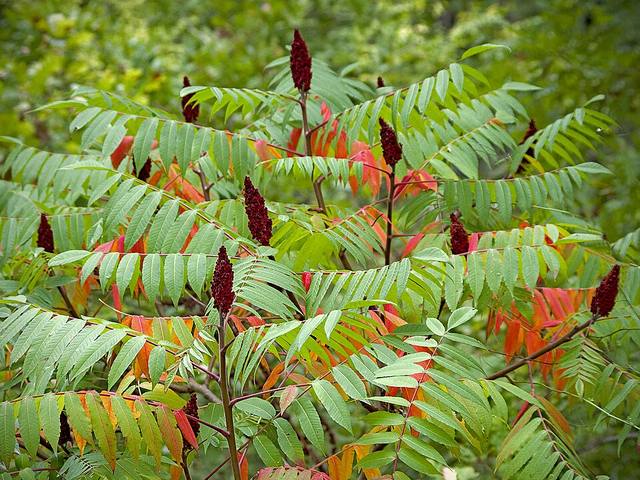
Velvet branches like antlers and berries for sumac-ade. It spreads, so give it room.
Hardiness: zones 3 to 8
Light: full sun
Size: about 15 ft tall, 15 ft wide
Harvest: August to September
From: E. North America
Drought-hardy once established
Here: Hardy in the Lake Erie shore climate (zone 6b to 7a), so it can live outdoors in the ground.
Good for: food, pollinators, wildlife.
Native to: Northeast, Midwest & Great Lakes, Southeast, Eastern Canada. Hardy in zones 3 to 8.
The story
Staghorn sumac grows throughout the Northeast and its sour red cones were made into a cooling drink and a dye by Haudenosaunee, Mi'kmaq and Abenaki people; the velvet-covered branches look like a buck's antlers in summer.
Planting
Full sun and poor, dry, drained soil; it tolerates almost anything but wet feet. Plant in spring; it suckers freely, so give it an edge or a mowed boundary.
Growing
No feeding or watering once established. Cut old trunks to the ground to renew. Brilliant orange-red in autumn.
Harvest and use
Harvest the red fuzzy clusters in late summer on a dry day; soak in cold water, strain, and sweeten for sumac-ade. Dry and grind the berries as a lemony spice.
What to watch for
Suckers; verticillium wilt occasionally.
See if Staghorn sumac fits your yard
Free planner: enter your ZIP for frost dates, climate fit and a sowing calendar. No account, no ads, no tracking cookies.
More native and wild plants
General guidance, not professional advice. Conditions vary by yard and year; for local specifics ask your county extension office. Never eat a wild plant you cannot identify with certainty. Traditional uses are shared as history, not medical advice. © 2026 Sean Priest · Irie Orchard. Terms & credits · Privacy · Home