Lowbush blueberry
Vaccinium angustifolium
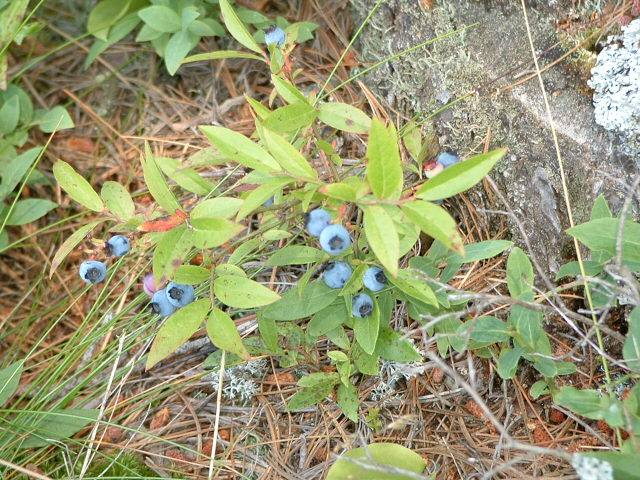
The wild Maine blueberry: small, intense, needs acid soil.
Hardiness: zones 2 to 6
Light: full sun
Size: about 1.5 ft tall, 2 ft wide
Harvest: July to August
From: NE North America
Drought-hardy once established
Here: Hardy in the Lake Erie shore climate (zone 6b to 7a), so it can live outdoors in the ground.
Good for: food, pollinators, wildlife, butterfly and moth caterpillars.
Native to: Northeast, Midwest & Great Lakes, Eastern Canada. Hardy in zones 2 to 6.
The story
Wild lowbush blueberries carpeted the burned-over barrens of Maine and the Maritimes, where Wabanaki peoples managed them with fire for thousands of years and dried the berries for winter; Maine growers still burn the fields every other year. They are the small, intense blueberries in muffins and pies.
Planting
Full sun, acid, sandy, drained soil; it will not grow in clay or lime. Plant in a bed of peat and sand, 12 inches apart; it spreads by rhizome into a mat.
Growing
Keep moist with rainwater, mulch with pine needles, and mow or burn the bed to the ground every other year after harvest; it fruits on one-year wood.
Harvest and use
Berries ripen in midsummer; rake or pick by hand. Smaller and sweeter than highbush. They freeze well.
What to watch for
Birds, and alkaline soil or water.
See if Lowbush blueberry fits your yard
Free planner: enter your ZIP for frost dates, climate fit and a sowing calendar. No account, no ads, no tracking cookies.
More native and wild plants
General guidance, not professional advice. Conditions vary by yard and year; for local specifics ask your county extension office. Never eat a wild plant you cannot identify with certainty. Traditional uses are shared as history, not medical advice. © 2026 Sean Priest · Irie Orchard. Terms & credits · Privacy · Home