Oregon grape
Mahonia aquifolium
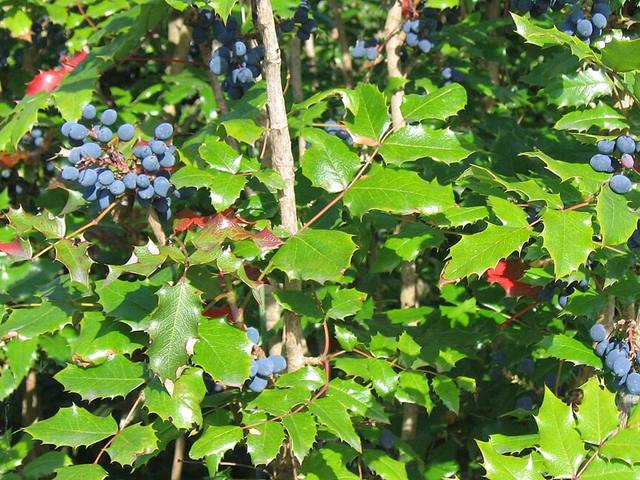
Holly-like leaves, yellow spring flowers, sour blue berries for jelly.
Hardiness: zones 5 to 9
Light: part shade
Size: about 6 ft tall, 5 ft wide
Harvest: August to September
From: W. North America
Drought-hardy once established
Here: Hardy in the Lake Erie shore climate (zone 6b to 7a), so it can live outdoors in the ground.
Good for: food, pollinators, wildlife.
Native to: Pacific Northwest, California, Rockies & Great Basin, Western Canada. Hardy in zones 5 to 9.
The story
Oregon grape's sour blue berries were eaten and mixed with sweeter fruit by the Coast Salish, Nez Perce and other Northwest nations, and the bright yellow inner root was a dye and a medicine for the stomach and skin, a use herbalists continue. It is Oregon's state flower.
Planting
Part shade or sun, drained soil; it tolerates dry shade under conifers. Plant in spring; evergreen, 3 to 6 feet, spreading slowly.
Growing
Water the first year, then little. Prune old stems to the ground for fresh growth. It is deer-resistant and tough.
Harvest and use
Berries ripen dusty blue in late summer; very tart, so make jelly, juice or wine, often blended with salal or apple.
What to watch for
Rust on leaves in wet climates; little else.
See if Oregon grape fits your yard
Free planner: enter your ZIP for frost dates, climate fit and a sowing calendar. No account, no ads, no tracking cookies.
More native and wild plants
General guidance, not professional advice. Conditions vary by yard and year; for local specifics ask your county extension office. Never eat a wild plant you cannot identify with certainty. Traditional uses are shared as history, not medical advice. © 2026 Sean Priest · Irie Orchard. Terms & credits · Privacy · Home