Thimbleberry
Rubus parviflorus
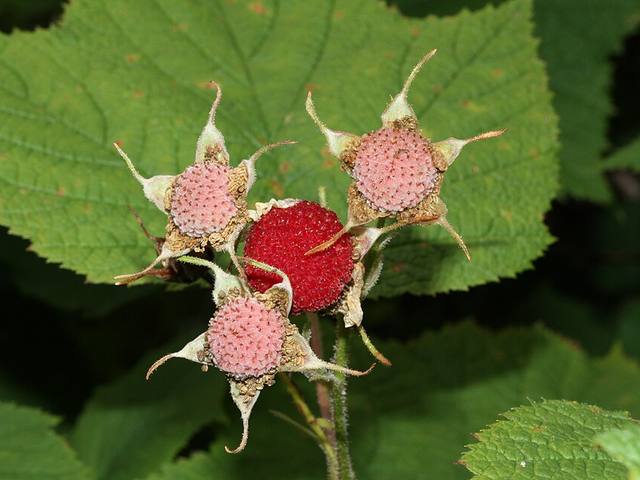
A thornless raspberry with soft, thimble-shaped fruit that never ships.
Hardiness: zones 3 to 8
Light: part shade
Size: about 6 ft tall, 6 ft wide
Harvest: July to August
From: W. and northern North America
Here: Hardy in the Lake Erie shore climate (zone 6b to 7a), so it can live outdoors in the ground.
Good for: food, pollinators, wildlife.
Native to: Pacific Northwest, California, Rockies & Great Basin, Midwest & Great Lakes, Alaska, Western Canada, Eastern Canada. Hardy in zones 3 to 8.
The story
Thimbleberries were gathered by nearly every people of the West and northern Great Lakes, from the Nlaka'pamux to the Anishinaabe, who ate them fresh and dried the shoots and berries; the big soft leaves served as plates and wrapping. Upper Michigan sells the jam by the jar.
Planting
Part shade or cool sun, moist rich soil; it hates heat and drought. Plant in spring; thornless canes spread into a 5-foot patch.
Growing
Water in dry spells and mulch. Cut spent canes after fruiting; new canes bear the next year. No thorns, so pruning is easy.
Harvest and use
Berries ripen red in midsummer, soft as velvet; pick gently into shallow trays and eat or cook the same day. Young spring shoots are peeled and eaten.
What to watch for
Heat and drought; a short shelf life.
See if Thimbleberry fits your yard
Free planner: enter your ZIP for frost dates, climate fit and a sowing calendar. No account, no ads, no tracking cookies.
More native and wild plants
General guidance, not professional advice. Conditions vary by yard and year; for local specifics ask your county extension office. Never eat a wild plant you cannot identify with certainty. Traditional uses are shared as history, not medical advice. © 2026 Sean Priest · Irie Orchard. Terms & credits · Privacy · Home