Silver buffaloberry
Shepherdia argentea
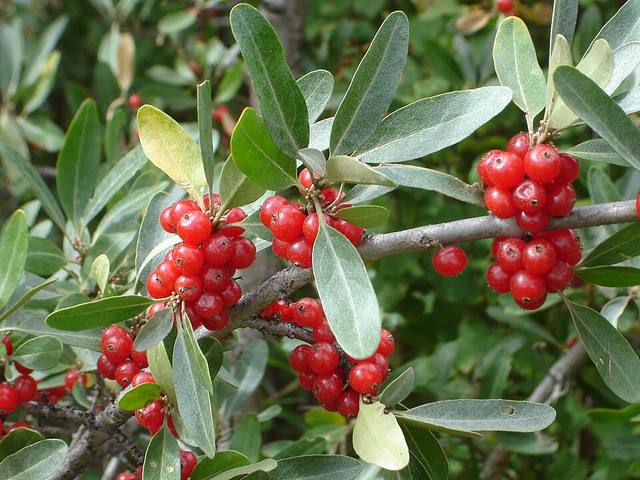
Silver leaves, tart red berries that sweeten after frost; fixes nitrogen.
Hardiness: zones 2 to 7
Light: full sun
Size: about 12 ft tall, 12 ft wide
Harvest: August to September
From: Great Plains
Drought-hardy once established
Here: Hardy in the Lake Erie shore climate (zone 6b to 7a), so it can live outdoors in the ground.
Good for: food, fixing nitrogen in the soil, wildlife.
Native to: Great Plains & Texas, Rockies & Great Basin, Western Canada, Desert Southwest, Midwest & Great Lakes. Hardy in zones 2 to 7.
The story
Silver buffaloberry was one of the Plains' key fruits: Lakota, Blackfoot and Hidatsa families gathered the tart red berries after frost, made them into a sauce for buffalo meat, and whipped them into a foam dessert. It fixes nitrogen and survives the driest alkaline soils.
Planting
Full sun and poor, dry, even alkaline or salty soil; it fixes its own nitrogen. Plant male and female, 6 feet apart; thorny, to 12 feet.
Growing
Water the first year, then nothing. It suckers and makes a fine windbreak hedge. No feeding.
Harvest and use
Berries ripen red in late summer and are best after frost; spread a sheet and beat the branches. Tart and rich in pectin; jelly, sauce and syrup.
What to watch for
Thorns; otherwise nearly indestructible.
See if Silver buffaloberry fits your yard
Free planner: enter your ZIP for frost dates, climate fit and a sowing calendar. No account, no ads, no tracking cookies.
More native and wild plants
General guidance, not professional advice. Conditions vary by yard and year; for local specifics ask your county extension office. Never eat a wild plant you cannot identify with certainty. Traditional uses are shared as history, not medical advice. © 2026 Sean Priest · Irie Orchard. Terms & credits · Privacy · Home