Oriental beech
Fagus orientalis
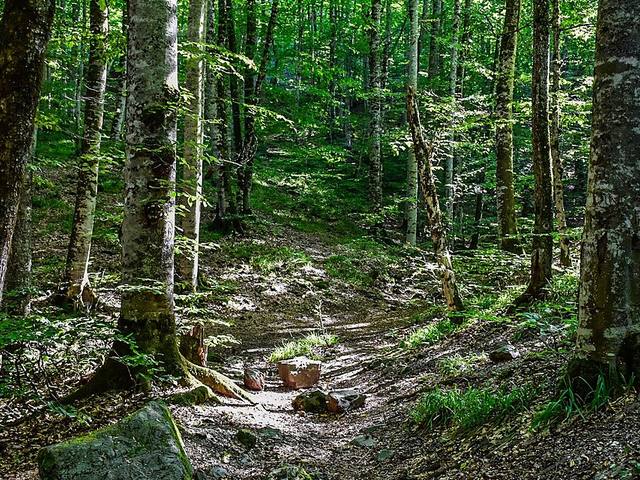
The great tree of Caucasian mountain forests; its mast of small oily nuts feeds wildlife in good years.
Hardiness: zones 5 to 8
Light: part shade
Size: about 100 ft tall, 50 ft wide
Harvest: September to October
From: Caucasus, N. Turkey and N. Iran
Here: Hardy in the Lake Erie shore climate (zone 6b to 7a), so it can live outdoors in the ground.
Good for: wildlife, food.
Native to: Caucasus. Hardy in zones 5 to 8.
The story
Oriental beech forms the cool, mossy forests of the Caucasus and the south shore of the Black Sea, some of the least disturbed broadleaf forests in the temperate world. Its wood built the region's houses and barrels.
Planting
Sun or shade, deep moist soil that drains, and room for a very large tree.
Growing
It needs little care. It also clips into a hedge that holds its copper leaves through winter.
Harvest and use
Mature trees drop small three-sided nuts in autumn in good years. They are for wildlife first; a few can be shelled and roasted.
What to watch for
Shallow roots dislike compaction and drought. Nuts are small and crops are irregular.
See if Oriental beech fits your yard
Free planner: enter your ZIP for frost dates, climate fit and a sowing calendar. No account, no ads, no tracking cookies.
More native and wild plants
General guidance, not professional advice. Conditions vary by yard and year; for local specifics ask your county extension office. Never eat a wild plant you cannot identify with certainty. Traditional uses are shared as history, not medical advice. © 2026 Sean Priest · Irie Orchard. Terms & credits · Privacy · Home