Pandanus (screwpine)
Pandanus tectorius
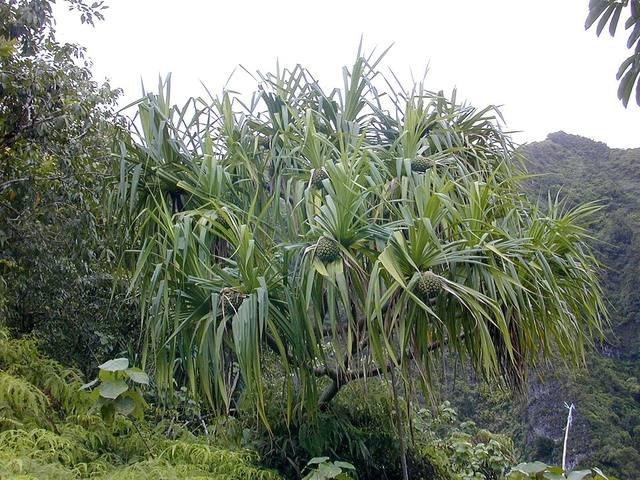
Fruit keys chewed or cooked across the Pacific; leaves woven into sails, mats and baskets.
Hardiness: zones 10 to 12
Light: full sun
Size: about 25 ft tall, 20 ft wide
Harvest: year-round
From: Pacific and New Guinea
Drought-hardy once established
Here: Too tender to overwinter outdoors on the Lake Erie shore (zone 6b to 7a): grow it in a pot and bring it in, or treat it as an annual.
Good for: food, screens and hedges.
Native to: Hawaiʻi & Pacific Islands, South & Southeast Asian tropics, New Guinea & Melanesia. Hardy in zones 10 to 12.
The story
Pandanus is one of the most useful plants of the Pacific and New Guinea. Its leaves were woven into canoe sails, mats, baskets and roofs, and its fruit keys were chewed or cooked as a staple on coral atolls where little else grows. Highland New Guineans farm karuka, a nut-bearing relative.
Planting
Full sun, sandy or rocky soil, salt spray tolerant; frost-free coasts, or a pot indoors. Plant a seedling or a stem cutting.
Growing
Very easy: it props itself on stilt roots and needs little water once settled.
Harvest and use
Cut ripe orange keys and chew the sweet base, or cook; strip and dry the leaves for weaving.
What to watch for
Saw-edged leaves; frost.
See if Pandanus (screwpine) fits your yard
Free planner: enter your ZIP for frost dates, climate fit and a sowing calendar. No account, no ads, no tracking cookies.
More tropical and subtropical food plants
General guidance, not professional advice. Conditions vary by yard and year; for local specifics ask your county extension office. Never eat a wild plant you cannot identify with certainty. Traditional uses are shared as history, not medical advice. © 2026 Sean Priest · Irie Orchard. Terms & credits · Privacy · Home