Brazilwood (pau-brasil)
Paubrasilia echinata
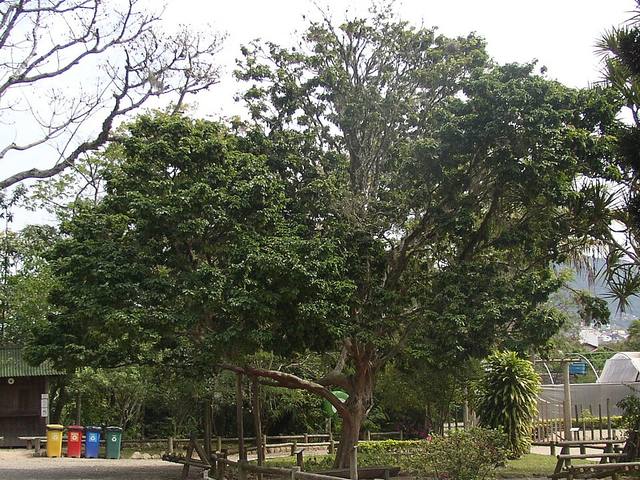
The tree that named a country; its red heartwood was traded until it nearly vanished. Yellow spring flowers for bees.
Hardiness: zones 10 to 12
Light: full sun
Size: about 40 ft tall, 25 ft wide
From: Coastal Atlantic Forest, Rio Grande do Norte to Rio de Janeiro
Drought-hardy once established
Here: Too tender to overwinter outdoors on the Lake Erie shore (zone 6b to 7a): grow it in a pot and bring it in, or treat it as an annual.
Good for: pollinators, wildlife.
Native to: Atlantic Forest of Brazil. Hardy in zones 10 to 12.
The story
Portuguese traders shipped its red heartwood to Europe for dye from the early 1500s, and the trade gave Brazil its name. Centuries of cutting made it rare; it is now protected and still prized for violin bows.
Planting
Full sun, well-drained soil; tolerates dry spells once rooted. Grows from fresh seed, slowly.
Growing
Little care needed. Stems are spiny, so give it a spot away from paths.
Harvest and use
A pollinator and heritage tree, not a food plant: bright yellow spring flowers for bees.
What to watch for
Spiny branches. It is endangered in the wild, so buy only nursery-grown trees.
See if Brazilwood (pau-brasil) fits your yard
Free planner: enter your ZIP for frost dates, climate fit and a sowing calendar. No account, no ads, no tracking cookies.
More native and wild plants
- Jatobá-do-cerrado
- Himalayan alder (utis)
- Camellia (tsubaki)
- Azores laurel (louro)
- Azores juniper (cedro-do-mato)
- Canary strawberry tree (madroño canario)
General guidance, not professional advice. Conditions vary by yard and year; for local specifics ask your county extension office. Never eat a wild plant you cannot identify with certainty. Traditional uses are shared as history, not medical advice. © 2026 Sean Priest · Irie Orchard. Terms & credits · Privacy · Home