Pili nut
Canarium ovatum
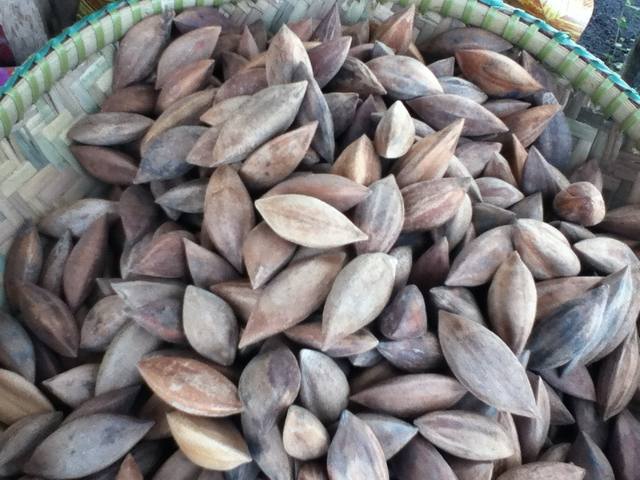
Rich, buttery nuts in a hard shell; the pride of the Bicol region.
Hardiness: zones 11 to 12
Light: full sun
Size: about 60 ft tall, 40 ft wide
Harvest: May to October
From: Philippines
Here: Too tender to overwinter outdoors on the Lake Erie shore (zone 6b to 7a): grow it in a pot and bring it in, or treat it as an annual.
Good for: food.
Native to: South & Southeast Asian tropics. Hardy in zones 11 to 12.
The story
Pili nuts have been gathered from the volcanic slopes of Bicol in the Philippines since before Spanish contact, where they are candied, roasted and pressed for oil; the resin, Manila elemi, was traded to Europe for varnish. The nut is richer than macadamia.
Planting
Full sun, drained volcanic or loamy soil, heat, humidity, and no frost; a 60-foot tree. Plant a grafted female with a male nearby in the wet tropics.
Growing
Water young trees, mulch, and leave it. It fruits in five to six years and bears for generations.
Harvest and use
Fruit ripens purple-black through the year; remove the pulp, dry, and crack the hard shell with a machete. Roast or candy the kernels.
What to watch for
Typhoons, and cold.
See if Pili nut fits your yard
Free planner: enter your ZIP for frost dates, climate fit and a sowing calendar. No account, no ads, no tracking cookies.
More nut trees
- Kukui (candlenut)
- Breadnut (Maya nut)
- Chilgoza pine
- Himalayan hazel
- Pehuén (monkey puzzle)
- Avellano (Chilean hazelnut)
General guidance, not professional advice. Conditions vary by yard and year; for local specifics ask your county extension office. Never eat a wild plant you cannot identify with certainty. Traditional uses are shared as history, not medical advice. © 2026 Sean Priest · Irie Orchard. Terms & credits · Privacy · Home