Eastern redbud
Cercis canadensis
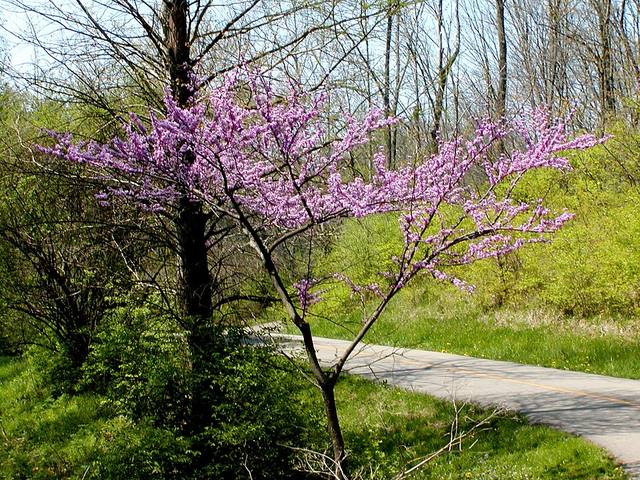
Pink flowers on bare twigs in April; the flowers are edible in salads.
Hardiness: zones 4 to 9
Light: full sun to part shade
Size: about 25 ft tall, 25 ft wide
Harvest: April to May
From: E. North America
Drought-hardy once established
Here: Hardy in the Lake Erie shore climate (zone 6b to 7a), so it can live outdoors in the ground.
Good for: food, pollinators, wildlife, butterfly and moth caterpillars.
Native to: Northeast, Southeast, Midwest & Great Lakes, Great Plains & Texas. Hardy in zones 4 to 9.
The story
Redbud's magenta spring flowers were eaten fresh, pickled and fried by Cherokee and other southeastern peoples, and the young pods cooked like beans; the bark treated fevers. It is the understory flame of the eastern spring and Oklahoma's state tree.
Planting
Full sun or part shade, any drained soil; it fixes nitrogen poorly but tolerates poor ground. Plant young; the taproot dislikes moving. A 20-foot tree.
Growing
Water the first summers, then little. Prune only dead wood. It is short-lived but seeds itself.
Harvest and use
Flowers in early spring on bare branches: toss in salads, pickle like capers, or fry in batter. Young tender pods in late spring, cooked.
What to watch for
Canker on older trunks, and verticillium wilt; otherwise easy.
See if Eastern redbud fits your yard
Free planner: enter your ZIP for frost dates, climate fit and a sowing calendar. No account, no ads, no tracking cookies.
More native and wild plants
General guidance, not professional advice. Conditions vary by yard and year; for local specifics ask your county extension office. Never eat a wild plant you cannot identify with certainty. Traditional uses are shared as history, not medical advice. © 2026 Sean Priest · Irie Orchard. Terms & credits · Privacy · Home