Eastern white pine
Pinus strobus
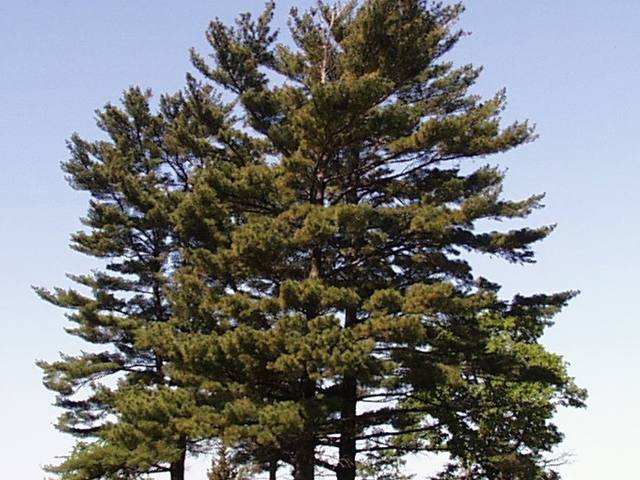
Soft needles and a skyline silhouette; needles make a vitamin C tea.
Hardiness: zones 3 to 8
Light: full sun to part shade
Size: about 80 ft tall, 40 ft wide
From: E. North America
Here: Hardy in the Lake Erie shore climate (zone 6b to 7a), so it can live outdoors in the ground.
Good for: wildlife.
Native to: Northeast, Midwest & Great Lakes, Southeast, Eastern Canada. Hardy in zones 3 to 8.
The story
Native across eastern North America, including the cool ravines and hillsides of northern Ohio. Count the needles in a bundle: white pine has 5, one for each letter of W-H-I-T-E. It's the tallest tree native to eastern North America.
Planting
Full sun to part shade. Soil: well-drained; tolerates clay if not waterlogged (pH 4.5–6.5). Pollination: wind.
Growing
Water: low once established. Winter: It's your winter windbreak and bird shelter. Knock off heavy wet snow from young branches. Spring: Pinch the new 'candles' by half if you want it denser; otherwise leave it be. Summer: Nothing needed. Fall: Inner needles turn yellow and drop every fall. That's normal, and they make great acidic mulch.
Harvest and use
Harvest: Needles for tea any time; cones in fall. First crop: —.
What to watch for
White pine blister rust (it alternates with currants and gooseberries), road salt, white pine weevil on the leader.
See if Eastern white pine fits your yard
Free planner: enter your ZIP for frost dates, climate fit and a sowing calendar. No account, no ads, no tracking cookies.
More native and wild plants
General guidance, not professional advice. Conditions vary by yard and year; for local specifics ask your county extension office. Never eat a wild plant you cannot identify with certainty. Traditional uses are shared as history, not medical advice. © 2026 Sean Priest · Irie Orchard. Terms & credits · Privacy · Home