Eastern red cedar
Juniperus virginiana
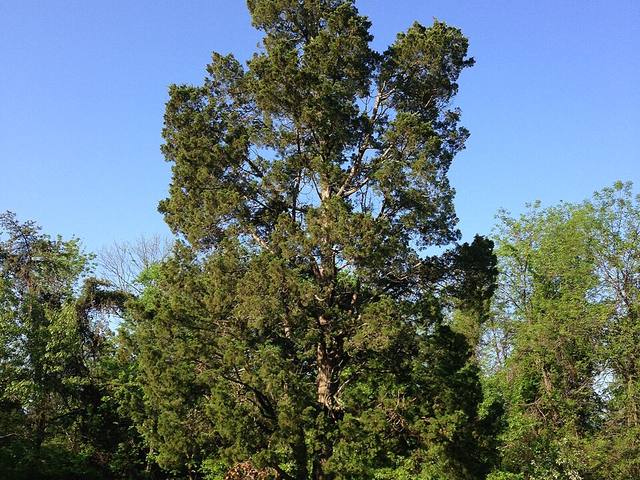
Winter cover and berries for cedar waxwings; tolerates poor, dry soil.
Hardiness: zones 2 to 9
Light: full sun
Size: about 40 ft tall, 15 ft wide
From: E. North America
Drought-hardy once established
Here: Hardy in the Lake Erie shore climate (zone 6b to 7a), so it can live outdoors in the ground.
Good for: wildlife.
Native to: Northeast, Southeast, Midwest & Great Lakes, Great Plains & Texas, Eastern Canada. Hardy in zones 2 to 9.
The story
Eastern red cedar is really a juniper. Its red, fragrant heartwood lines cedar chests and once made nearly every pencil in America. It is often the first tree to move into an old field, planted there by birds.
Planting
Full sun and any drained soil: rocky, dry, alkaline or poor. It makes a good windbreak.
Growing
Nothing. It needs no water once settled and no pruning.
Harvest and use
Dense winter cover for birds, and blue berry-like cones on female trees that cedar waxwings are named for. The same berries flavor gin.
What to watch for
It carries cedar-apple rust, so keep it well away from apples.
See if Eastern red cedar fits your yard
Free planner: enter your ZIP for frost dates, climate fit and a sowing calendar. No account, no ads, no tracking cookies.
More native and wild plants
General guidance, not professional advice. Conditions vary by yard and year; for local specifics ask your county extension office. Never eat a wild plant you cannot identify with certainty. Traditional uses are shared as history, not medical advice. © 2026 Sean Priest · Irie Orchard. Terms & credits · Privacy · Home