Sweetbay magnolia
Magnolia virginiana
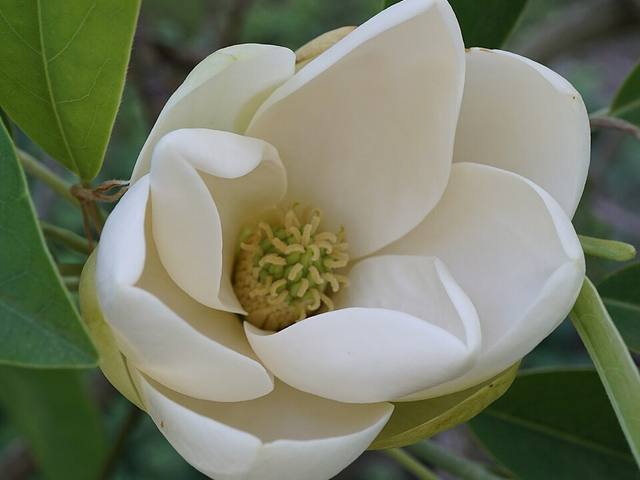
A smaller magnolia that handles wet soil and lemony summer blooms.
Hardiness: zones 5 to 10
Light: part shade to full sun
Size: about 20 ft tall, 15 ft wide
From: E. United States
Here: Hardy in the Lake Erie shore climate (zone 6b to 7a), so it can live outdoors in the ground.
Good for: pollinators, wildlife, butterfly and moth caterpillars.
Native to: Southeast, Northeast. Hardy in zones 5 to 10.
The story
Native to the swamps and coastal plain of the eastern U.S., from Massachusetts to Florida and Texas. Magnolias are older than bees: they evolved when beetles were the main pollinators, which is why the flowers are so tough and cup-shaped.
Planting
Full sun to part shade. Soil: moist to wet; one of the few trees happy in wet clay (pH 5.0–6.5). Pollination: beetles and bees.
Growing
Water: moist. Winter: In Ohio it's semi-evergreen: some leaves hang on silver side out, the rest drop. Both are normal. Spring: Prune only to remove dead wood, right after leaf-out. Summer: Creamy white, lemon-scented flowers open in late May and June, then a few more through summer. Water in drought. Fall: Cone-like fruits split to show bright red seeds that birds love.
Harvest and use
Harvest: Not grown for food. First crop: —.
What to watch for
Magnolia scale; leaf scorch in dry, windy spots.
See if Sweetbay magnolia fits your yard
Free planner: enter your ZIP for frost dates, climate fit and a sowing calendar. No account, no ads, no tracking cookies.
More native and wild plants
General guidance, not professional advice. Conditions vary by yard and year; for local specifics ask your county extension office. Never eat a wild plant you cannot identify with certainty. Traditional uses are shared as history, not medical advice. © 2026 Sean Priest · Irie Orchard. Terms & credits · Privacy · Home