ʻŌhiʻa lehua
Metrosideros polymorpha
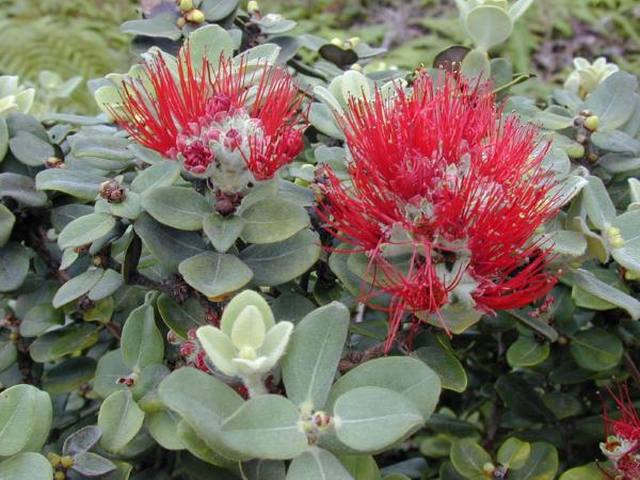
Red pompom flowers that feed Hawaiian honeycreepers.
Hardiness: zones 10 to 12
Light: full sun
Size: about 25 ft tall, 15 ft wide
From: Hawaiʻi
Here: Too tender to overwinter outdoors on the Lake Erie shore (zone 6b to 7a): grow it in a pot and bring it in, or treat it as an annual.
Good for: pollinators, wildlife.
Native to: Hawaiʻi & Pacific Islands. Hardy in zones 10 to 12.
The story
ʻŌhiʻa lehua is the first tree to grow on new Hawaiian lava and the most common tree in the native forest. In story, the tree is the warrior ʻŌhiʻa and the blossom is his beloved Lehua; pick the flower and it rains, for the lovers are parted.
Planting
Sun and sharp drainage, in lava cinder or a gritty mix. In Hawaiʻi, buy only from a nursery that certifies its plants free of Rapid ʻŌhiʻa Death.
Growing
Water young plants regularly. Do not wound the bark, and clean your tools and boots before and after working near any ʻōhiʻa.
Harvest and use
Red pompom flowers that feed ʻapapane, ʻiʻiwi and native bees, and a honey prized across the islands.
What to watch for
Rapid ʻŌhiʻa Death, a fungal disease spread through wounds and moved soil. Never transport ʻōhiʻa wood between islands.
See if ʻŌhiʻa lehua fits your yard
Free planner: enter your ZIP for frost dates, climate fit and a sowing calendar. No account, no ads, no tracking cookies.
More native and wild plants
General guidance, not professional advice. Conditions vary by yard and year; for local specifics ask your county extension office. Never eat a wild plant you cannot identify with certainty. Traditional uses are shared as history, not medical advice. © 2026 Sean Priest · Irie Orchard. Terms & credits · Privacy · Home