Witch hazel
Hamamelis virginiana
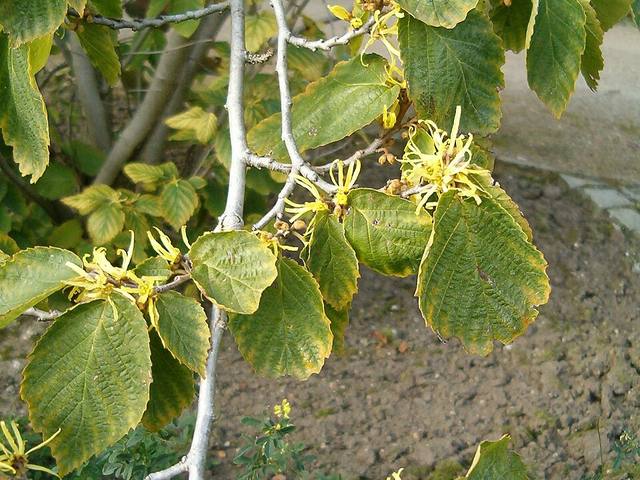
Blooms in November when nothing else dares; a gift to the last moths.
Hardiness: zones 3 to 8
Light: part shade
Size: about 15 ft tall, 15 ft wide
From: E. North America
Here: Hardy in the Lake Erie shore climate (zone 6b to 7a), so it can live outdoors in the ground.
Good for: pollinators, wildlife, traditional use.
Native to: Northeast, Southeast, Midwest & Great Lakes, Eastern Canada. Hardy in zones 3 to 8.
The story
Witch hazel flowers in late fall, after its own leaves have dropped, in yellow ribbons that curl up on freezing nights and unroll again when it warms. The 'witch' is from an old English word for bendy; its forked twigs were the dowser's favorite.
Planting
Part shade or sun, in moist, acid, woodsy soil. It suits the edge of a wood or the north side of a house.
Growing
Mulch with leaves and water in dry summers. Remove suckers if you want a single stem.
Harvest and use
The last nectar of the year for winter moths and late flies. The bark and twigs are distilled into the witch hazel sold in drugstores, a use learned from Native peoples.
What to watch for
Seed pods snap open and shoot seeds twenty feet. Mostly harmless.
Safety
Medicinal uses here are shared as history, not advice. Kitchen amounts are fine for most people, but teas, tinctures and supplements can interact with medicines and aren't safe for everyone, especially in pregnancy, while breastfeeding, for children, or with liver or kidney problems. Ask a doctor or pharmacist before taking any plant as medicine.
See if Witch hazel fits your yard
Free planner: enter your ZIP for frost dates, climate fit and a sowing calendar. No account, no ads, no tracking cookies.
More native and wild plants
General guidance, not professional advice. Conditions vary by yard and year; for local specifics ask your county extension office. Never eat a wild plant you cannot identify with certainty. Traditional uses are shared as history, not medical advice. © 2026 Sean Priest · Irie Orchard. Terms & credits · Privacy · Home