Ninebark
Physocarpus opulifolius
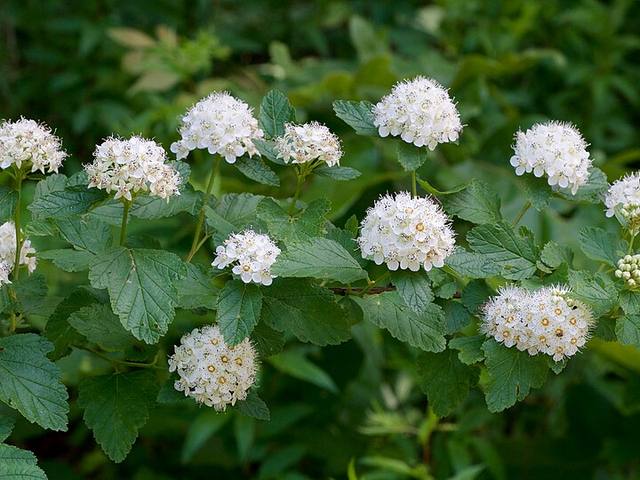
Peeling bark and white flower clusters; tough as an old boot.
Hardiness: zones 2 to 8
Light: full sun to part shade
Size: about 8 ft tall, 8 ft wide
From: E. North America
Drought-hardy once established
Here: Hardy in the Lake Erie shore climate (zone 6b to 7a), so it can live outdoors in the ground.
Good for: pollinators, wildlife, butterfly and moth caterpillars.
Native to: Northeast, Midwest & Great Lakes, Southeast, Eastern Canada, Rockies & Great Basin. Hardy in zones 2 to 8.
The story
Ninebark is named for bark that peels away in layer after layer, supposedly nine of them. It grows on stream banks and rocky slopes across the north and east, and it is about as tough as a shrub gets.
Planting
Sun or part shade, in almost any soil: clay, rock, wet or dry.
Growing
Cut a third of the oldest stems to the ground each winter to keep it fresh. That is all.
Harvest and use
White flower clusters in June for small native bees, red seed capsules after, and dense cover where songbirds nest.
What to watch for
Powdery mildew on some purple-leaved varieties. The plain green native rarely bothers.
See if Ninebark fits your yard
Free planner: enter your ZIP for frost dates, climate fit and a sowing calendar. No account, no ads, no tracking cookies.
More native and wild plants
General guidance, not professional advice. Conditions vary by yard and year; for local specifics ask your county extension office. Never eat a wild plant you cannot identify with certainty. Traditional uses are shared as history, not medical advice. © 2026 Sean Priest · Irie Orchard. Terms & credits · Privacy · Home