Pinyon pine
Pinus edulis
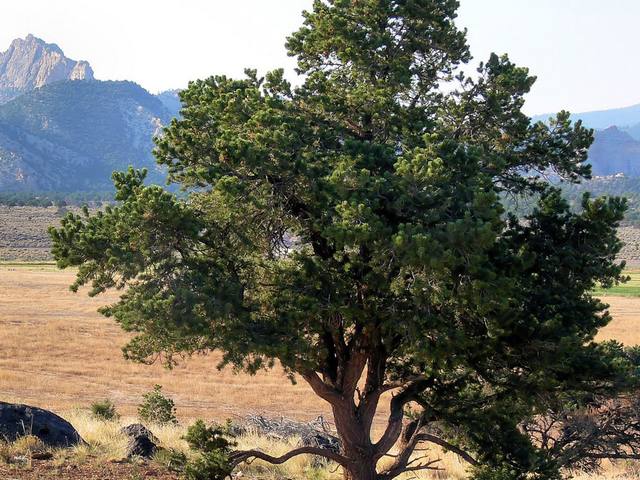
The source of pine nuts, in good years; a slow, dryland tree.
Hardiness: zones 4 to 8
Light: full sun
Size: about 25 ft tall, 20 ft wide
Harvest: September to October
From: SW United States
Drought-hardy once established
Here: Hardy in the Lake Erie shore climate (zone 6b to 7a), so it can live outdoors in the ground.
Good for: food, wildlife.
Native to: Desert Southwest, Rockies & Great Basin. Hardy in zones 4 to 8.
The story
Pinyon nuts have fed the Great Basin and Southwest for 10,000 years; for the Shoshone, Paiute and Navajo the autumn harvest was a sacred gathering, with the cones knocked down, roasted to open, and the nuts stored for winter. Pinyon pitch sealed baskets and water jars.
Planting
Full sun, dry, rocky, drained soil, and patience: it grows slowly and bears in 25 years or more. Plant small; it resents transplanting.
Growing
Water the first two summers, then never; it is a desert tree. No pruning. It needs no feeding and dislikes rich wet ground.
Harvest and use
Cones ripen in early autumn in good years, roughly every four to seven years; pick green cones, dry in the sun until they open, and roast the nuts lightly.
What to watch for
Pinyon ips beetle in drought-stressed trees; wet soil.
See if Pinyon pine fits your yard
Free planner: enter your ZIP for frost dates, climate fit and a sowing calendar. No account, no ads, no tracking cookies.
More native and wild plants
General guidance, not professional advice. Conditions vary by yard and year; for local specifics ask your county extension office. Never eat a wild plant you cannot identify with certainty. Traditional uses are shared as history, not medical advice. © 2026 Sean Priest · Irie Orchard. Terms & credits · Privacy · Home