Douglas fir
Pseudotsuga menziesii
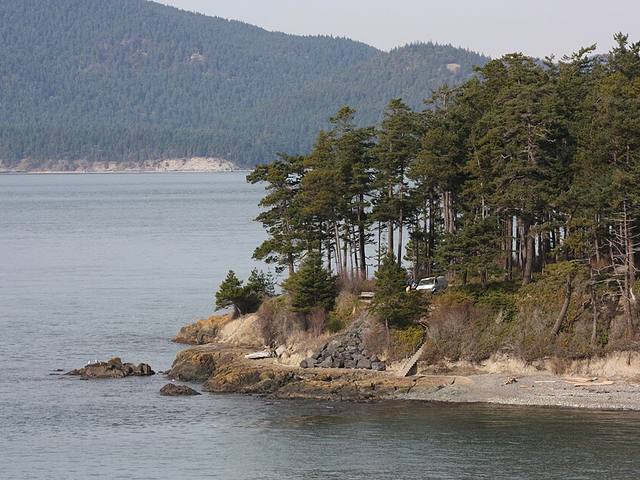
The classic western conifer; tender spring tips flavor syrups and teas.
Hardiness: zones 4 to 8
Light: full sun
Size: about 80 ft tall, 25 ft wide
From: W. North America
Here: Hardy in the Lake Erie shore climate (zone 6b to 7a), so it can live outdoors in the ground.
Good for: wildlife.
Native to: Pacific Northwest, California, Rockies & Great Basin, Desert Southwest, Western Canada. Hardy in zones 4 to 8.
The story
Douglas fir is not a true fir, and botanists argued about what to call it for a century. Coast Douglas firs are among the tallest trees ever measured. Look at a cone: the three-pointed bracts between the scales look like the hind feet and tail of a mouse diving for cover.
Planting
Sun and moist, well-drained, acid soil. It wants cool nights and is best in its home regions.
Growing
Water through dry summers while young. Give it space; it becomes a very large tree.
Harvest and use
Soft bright-green spring tips make a citrusy tea or syrup. Seeds feed crossbills and squirrels, and the canopy shelters everything.
What to watch for
It struggles in heat and humidity. Too big for small yards.
See if Douglas fir fits your yard
Free planner: enter your ZIP for frost dates, climate fit and a sowing calendar. No account, no ads, no tracking cookies.
More native and wild plants
General guidance, not professional advice. Conditions vary by yard and year; for local specifics ask your county extension office. Never eat a wild plant you cannot identify with certainty. Traditional uses are shared as history, not medical advice. © 2026 Sean Priest · Irie Orchard. Terms & credits · Privacy · Home