Scarlet runner bean
Phaseolus coccineus
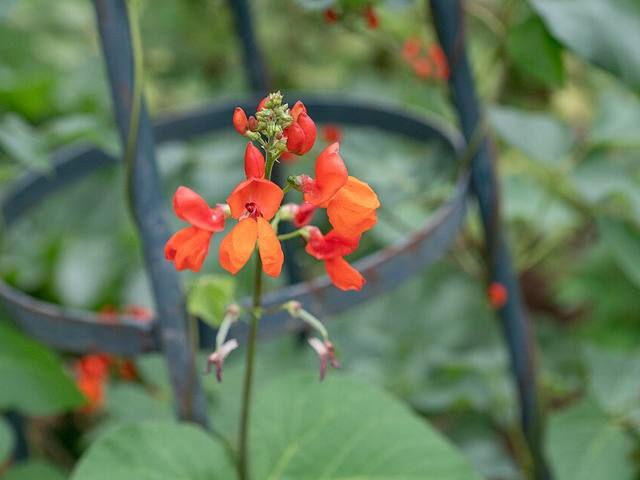
Red flowers for hummingbirds, long pods and big mottled beans; the bean for cool summers, perennial where frost is light.
Hardiness: zones 4 to 11
Light: full sun
Size: about 12 ft tall, 1 ft wide
Harvest: July to October
From: Highlands of Mexico and Guatemala
Here: Hardy in the Lake Erie shore climate (zone 6b to 7a), so it can live outdoors in the ground.
Good for: food, fixing nitrogen in the soil, pollinators.
Native to: Mexico, Central America & the Caribbean. Hardy in zones 4 to 11.
The story
The scarlet runner was grown in the cool highlands of Mexico and Guatemala more than two thousand years ago. Europeans first planted it for its flowers; Britain later made it a national vegetable.
Planting
Sun, rich moist soil and a tall support. Sow after frost.
Growing
It sets best in mild, humid weather. Where winters are light the fleshy root resprouts each year.
Harvest and use
Pick pods young and often, or let them fill for large shelling or dry beans. Cook the beans well.
What to watch for
Flowers drop without setting in hot, dry spells. Slugs on seedlings.
See if Scarlet runner bean fits your yard
Free planner: enter your ZIP for frost dates, climate fit and a sowing calendar. No account, no ads, no tracking cookies.
More annual vegetables, herbs and grains
General guidance, not professional advice. Conditions vary by yard and year; for local specifics ask your county extension office. Never eat a wild plant you cannot identify with certainty. Traditional uses are shared as history, not medical advice. © 2026 Sean Priest · Irie Orchard. Terms & credits · Privacy · Home