Kalmegh (green chiretta)
Andrographis paniculata
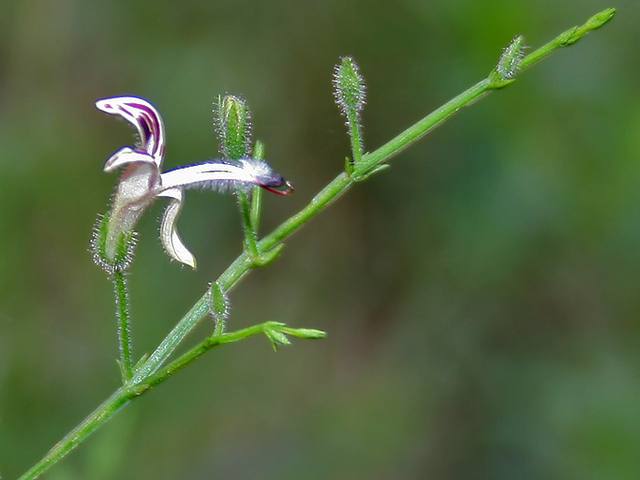
An erect, intensely bitter annual with small white-and-purple flowers; the leaves are steeped as a traditional bitter tea.
Hardiness: zones 6 to 11
Light: part shade to full sun
Size: about 3 ft tall, 1 ft wide
Harvest: September to October
From: India and Sri Lanka
Drought-hardy once established
Here: Hardy in the Lake Erie shore climate (zone 6b to 7a), so it can live outdoors in the ground.
Good for: traditional use, Ayurvedic tradition.
Native to: South & Southeast Asian tropics. Hardy in zones 6 to 11.
The story
Kalmegh is the king of bitters in Ayurveda, an upright annual with narrow leaves that is so bitter it has been used as a tonic tea and a first-aid plant across India. Its small flowers are white with purple marks.
Planting
Full sun to part shade and fertile, well-drained soil. Start seed indoors in early spring and transplant after frost; it needs a warm summer.
Growing
Water regularly and pinch the tips for bushiness. It sets seed readily; save a few for next year.
Harvest and use
Cut whole stems at flowering, dry in shade and crumble. Brew a few leaves only: it is very bitter. Traditional use; avoid in pregnancy.
What to watch for
Frost and waterlogged soil.
Safety
Medicinal uses here are shared as history, not advice. Kitchen amounts are fine for most people, but teas, tinctures and supplements can interact with medicines and aren't safe for everyone, especially in pregnancy, while breastfeeding, for children, or with liver or kidney problems. Ask a doctor or pharmacist before taking any plant as medicine.
See if Kalmegh (green chiretta) fits your yard
Free planner: enter your ZIP for frost dates, climate fit and a sowing calendar. No account, no ads, no tracking cookies.
More annual vegetables, herbs and grains
- Huauzontle
- Chia (Salvia hispanica)
- Summer savory (kondari)
- Tartary buckwheat (phapar)
- African nightshade (mnavu)
- Scotch bonnet pepper
General guidance, not professional advice. Conditions vary by yard and year; for local specifics ask your county extension office. Never eat a wild plant you cannot identify with certainty. Traditional uses are shared as history, not medical advice. © 2026 Sean Priest · Irie Orchard. Terms & credits · Privacy · Home