Tartary buckwheat (phapar)
Fagopyrum tataricum
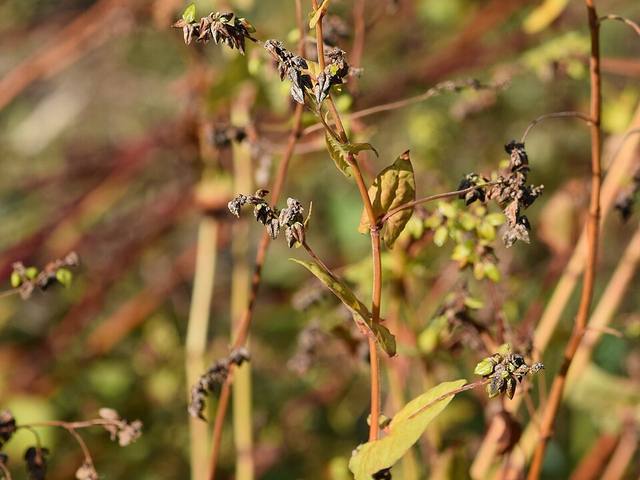
The bitter buckwheat that ripens where even barley gives up; ground for dhido and flatbread at 4,000 metres.
Hardiness: zones 2 to 9
Light: full sun
Size: about 3 ft tall, 1 ft wide
Harvest: August to October
From: Himalaya and southwest China
Here: Hardy in the Lake Erie shore climate (zone 6b to 7a), so it can live outdoors in the ground.
Good for: food, pollinators.
Native to: Himalaya & Indian hill country, East Asia. Hardy in zones 2 to 9.
The story
Tartary buckwheat is the grain of the high Himalaya, grown at 4,000 metres in Nepal, Bhutan, Ladakh and Yunnan, where the season is too short and cold for almost anything else.
Planting
Sow after the last frost in full sun on poor to average soil.
Growing
Nothing much. It matures in about three months and tolerates light frost better than common buckwheat.
Harvest and use
Cut when most seeds have darkened, dry and thresh. The flour is more bitter than common buckwheat; it is made into dhido, flatbreads and noodles, and the roasted grain into tea.
What to watch for
The tight hull is hard to remove at home. It self-sows.
See if Tartary buckwheat (phapar) fits your yard
Free planner: enter your ZIP for frost dates, climate fit and a sowing calendar. No account, no ads, no tracking cookies.
More annual vegetables, herbs and grains
General guidance, not professional advice. Conditions vary by yard and year; for local specifics ask your county extension office. Never eat a wild plant you cannot identify with certainty. Traditional uses are shared as history, not medical advice. © 2026 Sean Priest · Irie Orchard. Terms & credits · Privacy · Home