Sandpaper fig
Ficus coronata
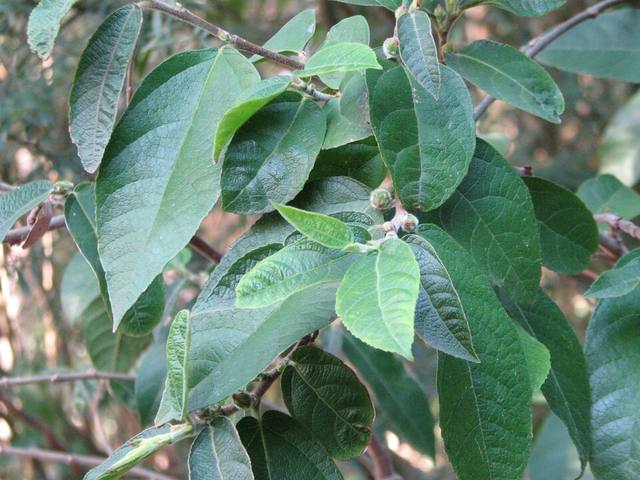
Leaves rough enough to sand a spear shaft, which is what they were used for; small purple figs along the water.
Hardiness: zones 9 to 11
Light: part shade
Size: about 25 ft tall, 15 ft wide
Harvest: July to December
From: Creeks of eastern Australia
Here: Too tender to overwinter outdoors on the Lake Erie shore (zone 6b to 7a): grow it in a pot and bring it in, or treat it as an annual.
Good for: food, wildlife.
Native to: Australia. Hardy in zones 9 to 11.
The story
Run a thumb over a sandpaper fig leaf and the name explains itself. Aboriginal peoples of the east coast used the leaves to give a final polish to spears, boomerangs and other wooden tools, and ate the figs along the creeks.
Planting
Part shade and moist soil near water. It suits a creek bank or rainforest garden.
Growing
Keep it watered. Prune to shape.
Harvest and use
Small purple-black figs, mainly in summer and autumn, on the trunk and branches. Rub off the hairy skin and eat the sweet inside. Fig birds, bats and possums come for the rest.
What to watch for
Milky sap irritates skin. Light frost only.
See if Sandpaper fig fits your yard
Free planner: enter your ZIP for frost dates, climate fit and a sowing calendar. No account, no ads, no tracking cookies.
More fruit trees
- Cherry of the Rio Grande
- Yamamomo (red bayberry)
- Shikuwasa (Okinawan lime)
- Apple
- Low-chill apple ('Anna', 'Dorsett Golden')
- European pear
General guidance, not professional advice. Conditions vary by yard and year; for local specifics ask your county extension office. Never eat a wild plant you cannot identify with certainty. Traditional uses are shared as history, not medical advice. © 2026 Sean Priest · Irie Orchard. Terms & credits · Privacy · Home