Sea buckthorn
Hippophae rhamnoides
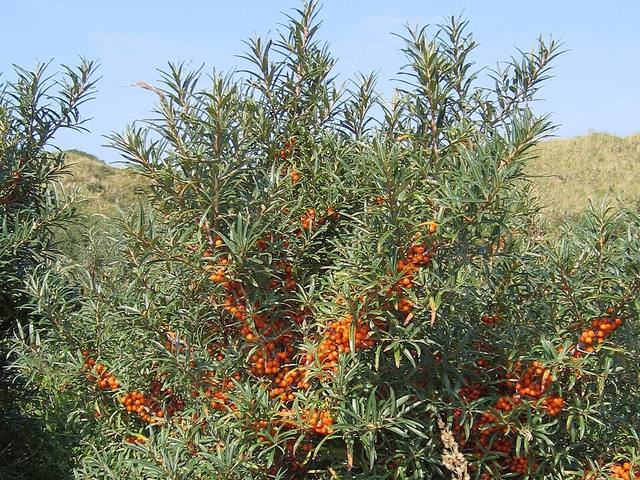
Fixes nitrogen and loves sandy soil; needs male and female.
Hardiness: zones 3 to 7
Light: full sun
Size: about 10 ft tall, 8 ft wide
Harvest: August to September
From: Eurasia
Drought-hardy once established
Here: Hardy in the Lake Erie shore climate (zone 6b to 7a), so it can live outdoors in the ground.
Good for: food, fixing nitrogen in the soil, traditional use.
Native to: Northern Europe & the taiga, Temperate Europe, Central Asian steppe, Himalaya & Indian hill country, Caucasus. Hardy in zones 3 to 7.
The story
Sea buckthorn has been gathered on the steppes and coasts of Eurasia for thousands of years; Tibetan medicine praised it, and Soviet cosmonauts were fed its oil. Mongolian herders pick the sour orange berries by freezing the branches and shaking them.
Planting
Full sun and poor, sandy, drained soil; it fixes its own nitrogen and hates rich wet ground. Plant one male for every five females, 6 feet apart.
Growing
Water the first summer, then leave it alone. It suckers and is very thorny; mow around it. Prune lightly to keep it pickable.
Harvest and use
Berries ripen orange in late summer and cling tightly; cut small branches and freeze them, then strip the fruit. Juice it with honey; it is too sour alone.
What to watch for
Thorns and suckers; otherwise nearly nothing.
Safety
Medicinal uses here are shared as history, not advice. Kitchen amounts are fine for most people, but teas, tinctures and supplements can interact with medicines and aren't safe for everyone, especially in pregnancy, while breastfeeding, for children, or with liver or kidney problems. Ask a doctor or pharmacist before taking any plant as medicine.
See if Sea buckthorn fits your yard
Free planner: enter your ZIP for frost dates, climate fit and a sowing calendar. No account, no ads, no tracking cookies.
More berries and small fruit
General guidance, not professional advice. Conditions vary by yard and year; for local specifics ask your county extension office. Never eat a wild plant you cannot identify with certainty. Traditional uses are shared as history, not medical advice. © 2026 Sean Priest · Irie Orchard. Terms & credits · Privacy · Home