Sycamore fig
Ficus sycomorus
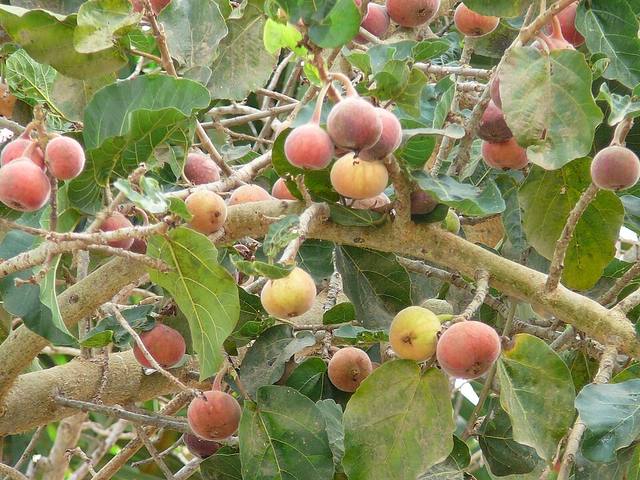
The fig of ancient Egypt, fruiting in clusters on the trunk; a huge shade tree for a hot yard.
Hardiness: zones 10 to 12
Light: full sun
Size: about 50 ft tall, 60 ft wide
Harvest: year-round
From: Egypt, Arabia and tropical Africa
Drought-hardy once established
Here: Too tender to overwinter outdoors on the Lake Erie shore (zone 6b to 7a): grow it in a pot and bring it in, or treat it as an annual.
Good for: food, wildlife.
Native to: Sahara & Arabian deserts, African savannas & tropics. Hardy in zones 10 to 12.
The story
The sycamore fig was the tree of life of ancient Egypt, planted at tombs and carved on walls; its figs, gashed to ripen as Amos the prophet did, fed the Nile valley for 5,000 years, and Zacchaeus climbed one in the Gospel. It still shades villages from Egypt to Kenya.
Planting
Full sun, any soil, heat, and no frost; it reaches a vast size. Plant a cutting in the dry tropics; it fruits only where its pollinator wasp lives, or by gashing the figs.
Growing
Water young trees deeply, then little. Prune hard to keep it in bounds; it takes it.
Harvest and use
Figs grow in clusters on the trunk and ripen several times a year; gash or pierce them a few days before picking to speed ripening. Smaller and milder than common figs.
What to watch for
Cold, and fig wasps absent outside its home range.
See if Sycamore fig fits your yard
Free planner: enter your ZIP for frost dates, climate fit and a sowing calendar. No account, no ads, no tracking cookies.
More tropical and subtropical food plants
General guidance, not professional advice. Conditions vary by yard and year; for local specifics ask your county extension office. Never eat a wild plant you cannot identify with certainty. Traditional uses are shared as history, not medical advice. © 2026 Sean Priest · Irie Orchard. Terms & credits · Privacy · Home