Ume (Japanese apricot)
Prunus mume
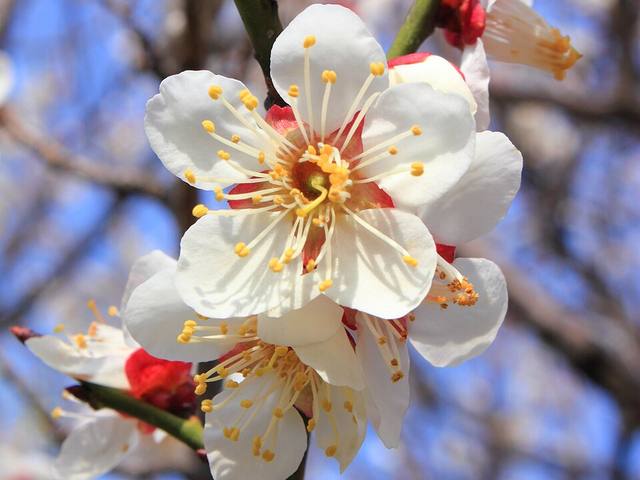
Scented blossom in the last of winter, then sour green fruit for umeboshi pickles and plum wine.
Hardiness: zones 6 to 9
Light: full sun
Size: about 20 ft tall, 20 ft wide
Harvest: May to June
From: China
Here: Hardy in the Lake Erie shore climate (zone 6b to 7a), so it can live outdoors in the ground.
Good for: food, pollinators.
Native to: East Asia. Hardy in zones 6 to 9.
The story
Ume blossom, opening in the last snow, has been painted and praised in China, Korea and Japan for well over a thousand years as a sign of endurance. The sour fruit is salted with red perilla into umeboshi or steeped in spirit for umeshu.
Planting
Full sun, shelter from late frost and soil that drains.
Growing
Prune after flowering to keep an open shape. Most trees crop better with a second variety nearby.
Harvest and use
Pick the fruit green and hard in early summer for wine and syrup, or yellow for pickling. It is never eaten raw and unripe.
What to watch for
The early flowers are easily caught by frost. Raw green fruit and kernels are toxic until pickled or steeped.
See if Ume (Japanese apricot) fits your yard
Free planner: enter your ZIP for frost dates, climate fit and a sowing calendar. No account, no ads, no tracking cookies.
More fruit trees
- Tejocote (Mexican hawthorn)
- Waterberry (umdoni)
- Wild plum (umgwenya)
- Arrayán (Chilean myrtle)
- Algarrobo blanco
- Guabiyú
General guidance, not professional advice. Conditions vary by yard and year; for local specifics ask your county extension office. Never eat a wild plant you cannot identify with certainty. Traditional uses are shared as history, not medical advice. © 2026 Sean Priest · Irie Orchard. Terms & credits · Privacy · Home