Wild plum (umgwenya)
Harpephyllum caffrum
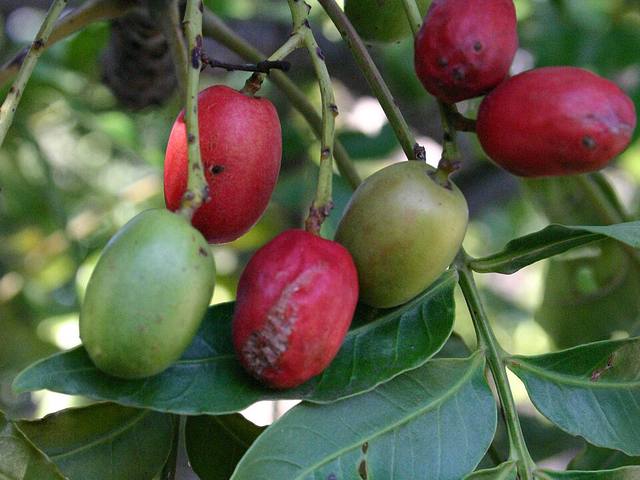
A tidy evergreen street tree that also drops sour red plums, good for jelly and a rosé-coloured wine.
Hardiness: zones 9 to 11
Light: full sun
Size: about 40 ft tall, 30 ft wide
Harvest: September to November
From: Eastern Cape to Mozambique
Drought-hardy once established
Here: Too tender to overwinter outdoors on the Lake Erie shore (zone 6b to 7a): grow it in a pot and bring it in, or treat it as an annual.
Good for: food, wildlife.
Native to: Cape of South Africa, African savannas & tropics. Hardy in zones 9 to 11.
The story
The wild plum is a cousin of the mango and the marula. It is planted along streets across South Africa, and Xhosa and Zulu households have long used its bark as a traditional remedy and a dye.
Planting
Sun and well-drained soil in a climate with little frost. Plant male and female for fruit.
Growing
Water young trees. It is tidy, evergreen and wind-firm.
Harvest and use
Sour red plums in autumn, with thin flesh over a big stone: good for jelly, syrup and a rosé-colored wine. Birds and children take care of the rest.
What to watch for
Frost. Fruit drop under female trees is messy over paving.
See if Wild plum (umgwenya) fits your yard
Free planner: enter your ZIP for frost dates, climate fit and a sowing calendar. No account, no ads, no tracking cookies.
More fruit trees
General guidance, not professional advice. Conditions vary by yard and year; for local specifics ask your county extension office. Never eat a wild plant you cannot identify with certainty. Traditional uses are shared as history, not medical advice. © 2026 Sean Priest · Irie Orchard. Terms & credits · Privacy · Home