Caucasian pear
Pyrus communis subsp. caucasica
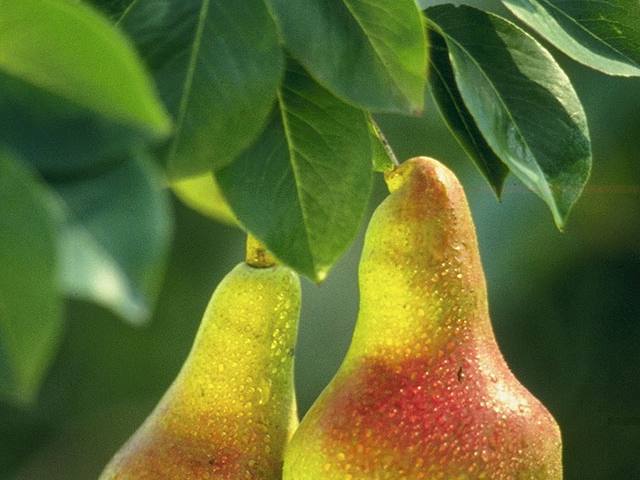
A wild ancestor of the garden pear: small hard fruit for drying, and a rootstock that lasts a century.
Hardiness: zones 4 to 8
Light: full sun
Size: about 50 ft tall, 30 ft wide
Harvest: September to October
From: Forests of the Caucasus
Drought-hardy once established
Here: Hardy in the Lake Erie shore climate (zone 6b to 7a), so it can live outdoors in the ground.
Good for: food, pollinators, wildlife.
Native to: Caucasus. Hardy in zones 4 to 8.
The story
The forests of the Caucasus are one of the homelands of the pear. This wild form is among the parents of the garden pear, and old trees stand alone in the hay meadows of Georgia and Armenia, left there for shade and for fruit.
Planting
Full sun and deep soil. It takes drought, cold and poor ground.
Growing
It needs very little. Seedlings are slow to bear.
Harvest and use
Small hard pears in autumn. They are dried whole, cooked into compote or left to soften after picking. Seedlings make long-lived rootstocks for grafted pears.
What to watch for
Thorny when young. Fire blight.
See if Caucasian pear fits your yard
Free planner: enter your ZIP for frost dates, climate fit and a sowing calendar. No account, no ads, no tracking cookies.
More fruit trees
- Mehal (Himalayan wild pear)
- Lapsi (Nepali hog plum)
- Quandong (desert peach)
- Desert lime
- Sandpaper fig
- Cherry of the Rio Grande
General guidance, not professional advice. Conditions vary by yard and year; for local specifics ask your county extension office. Never eat a wild plant you cannot identify with certainty. Traditional uses are shared as history, not medical advice. © 2026 Sean Priest · Irie Orchard. Terms & credits · Privacy · Home