White oak
Quercus alba
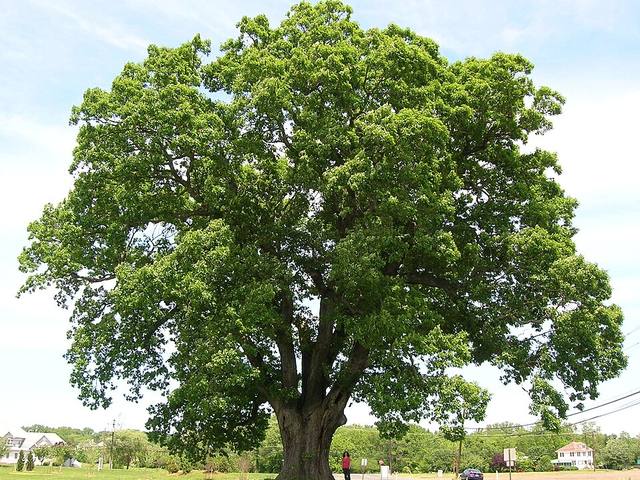
Feeds more caterpillars, and so more songbirds, than almost any other tree. Patience required: it plans in centuries.
Hardiness: zones 3 to 9
Light: full sun
Size: about 80 ft tall, 80 ft wide
From: E. North America
Drought-hardy once established
Here: Hardy in the Lake Erie shore climate (zone 6b to 7a), so it can live outdoors in the ground.
Good for: wildlife, butterfly and moth caterpillars.
Native to: Northeast, Southeast, Midwest & Great Lakes, Great Plains & Texas, Eastern Canada. Hardy in zones 3 to 9.
The story
White oak is the great tree of the eastern forest. Its tight-grained wood built ships and still holds whiskey, and its sweet acorns, low in bitter tannin, were a staple food leached and ground into meal by many Native nations.
Planting
Plant a small tree or an acorn in fall, in full sun and deep, well-drained soil. Its taproot resents moving, so choose the spot for the next two hundred years.
Growing
Water through the first few summers, mulch wide, and keep mowers and string trimmers away from the trunk. Prune only in winter.
Harvest and use
Shade, acorns for wildlife, and more caterpillars for nesting birds than almost any other tree. The acorns ripen in a single season and drop in early fall.
What to watch for
Oak wilt: never prune from April to July. Slow to start; that is normal.
See if White oak fits your yard
Free planner: enter your ZIP for frost dates, climate fit and a sowing calendar. No account, no ads, no tracking cookies.
More native and wild plants
General guidance, not professional advice. Conditions vary by yard and year; for local specifics ask your county extension office. Never eat a wild plant you cannot identify with certainty. Traditional uses are shared as history, not medical advice. © 2026 Sean Priest · Irie Orchard. Terms & credits · Privacy · Home