Wild lupine
Lupinus perennis
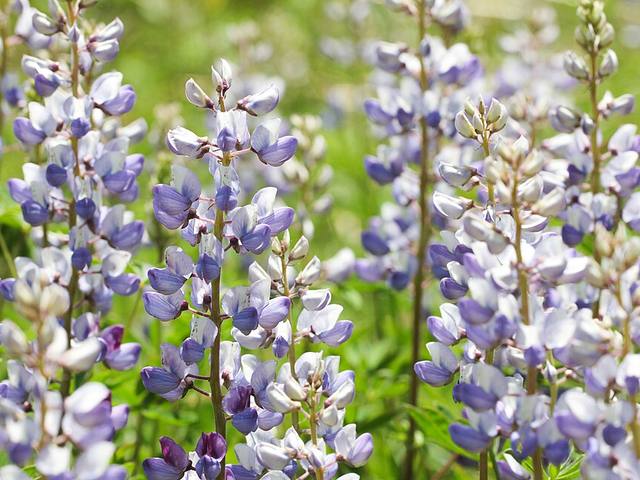
The only host of the endangered Karner blue butterfly; loves sandy soil.
Hardiness: zones 3 to 8
Light: full sun
Size: about 2 ft tall, 1.5 ft wide
From: E. North America
Drought-hardy once established
Here: Hardy in the Lake Erie shore climate (zone 6b to 7a), so it can live outdoors in the ground.
Good for: fixing nitrogen in the soil, pollinators, butterfly and moth caterpillars.
Native to: Northeast, Midwest & Great Lakes, Eastern Canada. Hardy in zones 3 to 8.
The story
Wild lupine is the only plant the caterpillar of the Karner blue butterfly will eat. As the sandy oak openings where lupine grew were built over, the butterfly nearly vanished with it. Planting lupine in sandy places is part of bringing it back.
Planting
Full sun and sandy, acid, poor soil. Scratch the seed and sow it in fall where it is to grow.
Growing
Don't fertilize, don't mulch heavily, and don't move it: the taproot is long and brittle.
Harvest and use
Blue spires in May for bumblebees, and a host plant for Karner blue, frosted elfin and wild indigo duskywing butterflies.
What to watch for
Western and hybrid garden lupines are different plants and no use to the Karner blue. Check the Latin name.
See if Wild lupine fits your yard
Free planner: enter your ZIP for frost dates, climate fit and a sowing calendar. No account, no ads, no tracking cookies.
More native and wild plants
- Texas bluebonnet
- California poppy
- Foxglove beardtongue
- Rocky Mountain penstemon
- Blanket flower
- Lanceleaf coreopsis
General guidance, not professional advice. Conditions vary by yard and year; for local specifics ask your county extension office. Never eat a wild plant you cannot identify with certainty. Traditional uses are shared as history, not medical advice. © 2026 Sean Priest · Irie Orchard. Terms & credits · Privacy · Home