Amaranth (grain and greens)
Amaranthus cruentus, A. hypochondriacus
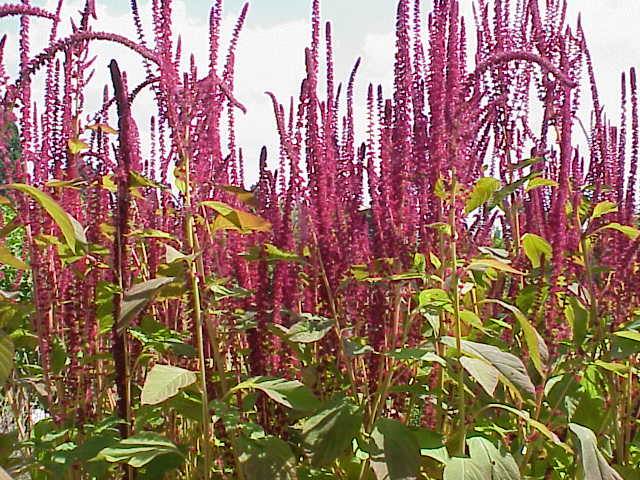
Young leaves cook like spinach; the seed heads give a protein-rich grain.
Hardiness: zones 2 to 11
Light: full sun
Size: about 5 ft tall, 2 ft wide
Harvest: July to September
From: Central America
Drought-hardy once established
Here: Hardy in the Lake Erie shore climate (zone 6b to 7a), so it can live outdoors in the ground.
Good for: food, pollinators.
Native to: Tropical South America, Himalaya & Indian hill country, Mexico, Central America & the Caribbean. Hardy in zones 2 to 11.
The story
Domesticated in Mexico and the Andes. Mexico's popped-amaranth candy is called alegría, meaning 'joy'.
Planting
Full sun. Soil: any, tolerates poor soil (pH 6.0–7.5). Spacing: 18 in. Pollination: wind.
Growing
Water: drought-tolerant. Winter: Leave a seed head for goldfinches, then compost. Spring: Sow after the last frost. Summer: Eat young leaves like spinach. Fall: Cut seed heads when birds start picking at them; dry them in a paper bag.
Harvest and use
Harvest: Leaves Jun–Aug · seed heads Sep–Oct. First crop: one season (annual).
What to watch for
Self-sows heavily.
See if Amaranth (grain and greens) fits your yard
Free planner: enter your ZIP for frost dates, climate fit and a sowing calendar. No account, no ads, no tracking cookies.
More annual vegetables, herbs and grains
General guidance, not professional advice. Conditions vary by yard and year; for local specifics ask your county extension office. Never eat a wild plant you cannot identify with certainty. Traditional uses are shared as history, not medical advice. © 2026 Sean Priest · Irie Orchard. Terms & credits · Privacy · Home