Quinoa
Chenopodium quinoa
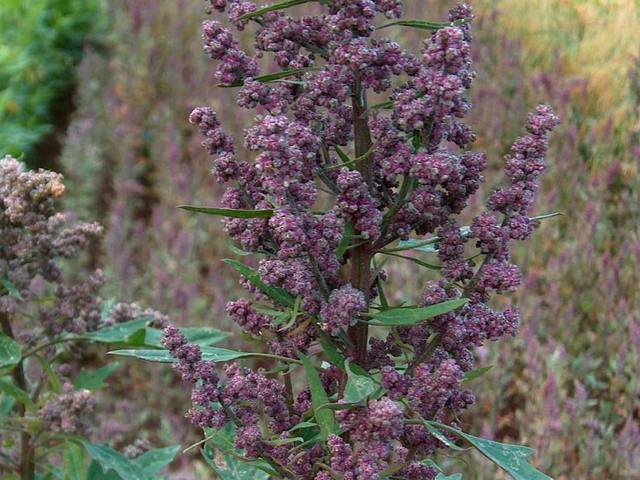
Wants cool nights to set seed; rinse off the bitter coating before cooking.
Hardiness: zones 4 to 11
Light: full sun
Size: about 5 ft tall, 1.5 ft wide
Harvest: September to October
From: Andes around Lake Titicaca
Drought-hardy once established
Here: Hardy in the Lake Erie shore climate (zone 6b to 7a), so it can live outdoors in the ground.
Good for: food.
Native to: Andean highlands. Hardy in zones 4 to 11.
The story
Quinoa was the mother grain of the Andes, grown around Lake Titicaca for 5,000 years and sacred to the Inca, who opened the planting with a golden foot plough; the Spanish suppressed it, and Andean farmers kept it alive until the world rediscovered it in the 2000s.
Planting
Full sun, drained soil, and a cool summer with dry weather at harvest; sow directly in spring, a quarter inch deep, thinned to 12 inches. It fails in heat and humidity.
Growing
Water modestly; it is drought-hardy. Weed while young; it looks like lamb's quarters, its cousin. Stake in wind.
Harvest and use
Cut heads in autumn when seeds rub out easily, before rain; dry, thresh, and rinse thoroughly to remove the bitter saponin coat.
What to watch for
Heat during flowering, aphids, and rain at harvest.
See if Quinoa fits your yard
Free planner: enter your ZIP for frost dates, climate fit and a sowing calendar. No account, no ads, no tracking cookies.
More annual vegetables, herbs and grains
General guidance, not professional advice. Conditions vary by yard and year; for local specifics ask your county extension office. Never eat a wild plant you cannot identify with certainty. Traditional uses are shared as history, not medical advice. © 2026 Sean Priest · Irie Orchard. Terms & credits · Privacy · Home