Bitter gourd (karela)
Momordica charantia
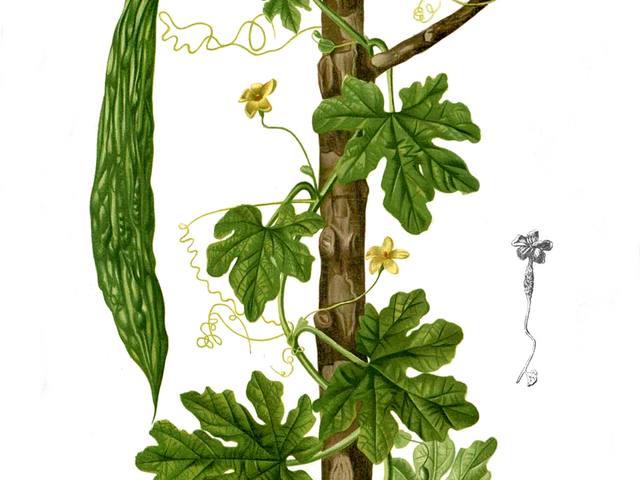
The bitter vine of Indian kitchens; trellis it and pick young.
Hardiness: zones 8 to 12
Light: full sun
Size: about 8 ft tall, 3 ft wide
Harvest: July to October
From: South Asia
Here: Too tender to overwinter outdoors on the Lake Erie shore (zone 6b to 7a): grow it in a pot and bring it in, or treat it as an annual.
Good for: food, pollinators.
Native to: South & Southeast Asian tropics. Hardy in zones 8 to 12.
The story
Bitter gourd has been grown in India for thousands of years and praised in Ayurveda for the blood; it crossed to China by the 1300s and to the Caribbean with Indian indentured workers, becoming the cerasee of Jamaican tea. The bitterness is the point.
Planting
Full sun, rich drained soil, heat, and a trellis; sow seed after the soil warms, an inch deep, and train the vine up 6 feet.
Growing
Water and feed steadily; pinch the tip at 5 feet to branch. Hand-pollinate if bees are few.
Harvest and use
Pick young at 4 to 8 inches, green and firm; ripe fruit turns orange and splits to show red seed coats. Salt and squeeze to tame the bitterness.
What to watch for
Fruit fly, powdery mildew, and cool weather.
See if Bitter gourd (karela) fits your yard
Free planner: enter your ZIP for frost dates, climate fit and a sowing calendar. No account, no ads, no tracking cookies.
More annual vegetables, herbs and grains
- Bottle gourd (lauki)
- Ridge gourd (turai)
- Fenugreek (methi)
- Chickpea (chana)
- Mung bean (moong)
- Sesame (til)
General guidance, not professional advice. Conditions vary by yard and year; for local specifics ask your county extension office. Never eat a wild plant you cannot identify with certainty. Traditional uses are shared as history, not medical advice. © 2026 Sean Priest · Irie Orchard. Terms & credits · Privacy · Home