Jicama
Pachyrhizus erosus
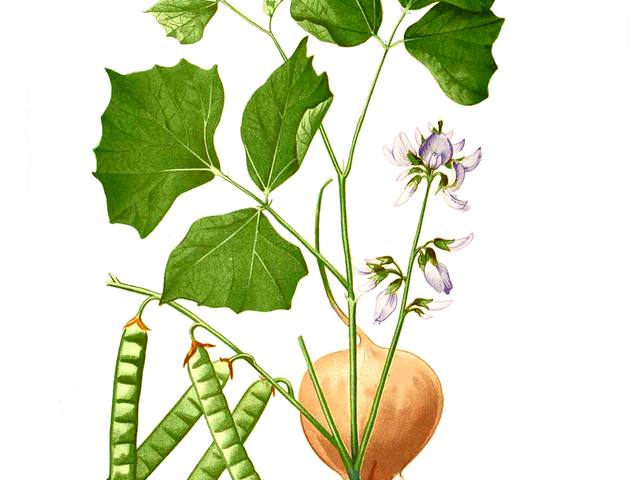
Crisp, sweet roots eaten raw after a long warm season. Only the root is edible.
Hardiness: zones 7 to 11
Light: full sun
Size: about 6 ft tall, 3 ft wide
Harvest: October to November
From: Mexico and Central America
Here: Hardy in the Lake Erie shore climate (zone 6b to 7a), so it can live outdoors in the ground.
Good for: food.
Native to: Mexico, Central America & the Caribbean. Hardy in zones 7 to 11.
The story
Jicama was grown by the Aztec and Maya, who ate the crisp root with chile and lime as Mexicans still do on every street corner; the Spanish carried it to the Philippines, where it is singkamas. Only the root is edible; the rest of the plant is poisonous.
Planting
Full sun, loose sandy soil, and a long hot season of at least five months; sow seed after the soil warms, 8 inches apart, with a trellis for the 15-foot vine.
Growing
Water steadily, pinch off flowers to size up the root, and trellis the vine. No nitrogen.
Harvest and use
Dig before frost, four to nine months in; the root should be the size of a grapefruit. Peel and eat raw with lime and chile. Store cool and dry, not in the fridge.
What to watch for
The toxic seeds, pods and leaves; cold soil.
See if Jicama fits your yard
Free planner: enter your ZIP for frost dates, climate fit and a sowing calendar. No account, no ads, no tracking cookies.
More annual vegetables, herbs and grains
- Tepary bean
- Everglades tomato
- Bitter gourd (karela)
- Bottle gourd (lauki)
- Ridge gourd (turai)
- Fenugreek (methi)
General guidance, not professional advice. Conditions vary by yard and year; for local specifics ask your county extension office. Never eat a wild plant you cannot identify with certainty. Traditional uses are shared as history, not medical advice. © 2026 Sean Priest · Irie Orchard. Terms & credits · Privacy · Home