Angelica
Angelica archangelica
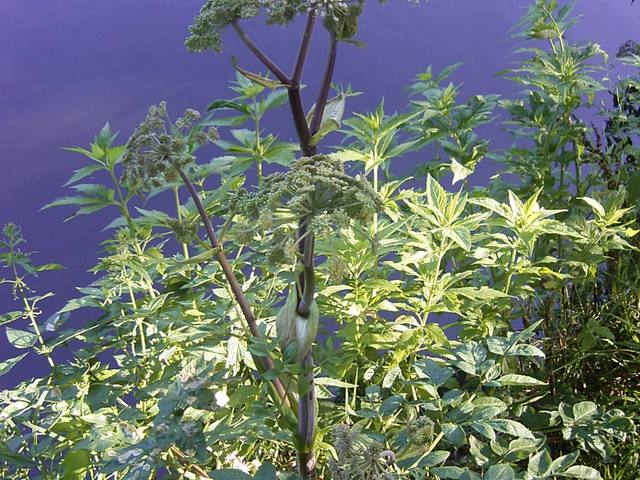
A giant Nordic herb; candy the young stems, and the flower domes feed swarms of pollinators.
Hardiness: zones 4 to 7
Light: part shade
Size: about 6 ft tall, 3 ft wide
Harvest: May to June
From: Northern Europe and Iceland
Here: Hardy in the Lake Erie shore climate (zone 6b to 7a), so it can live outdoors in the ground.
Good for: food, pollinators, traditional use.
Native to: Northern Europe & the taiga. Hardy in zones 4 to 7.
The story
Angelica was the medicine plant of the north, chewed and brewed by Sámi and Norse people against plague and cold, and its candied stems decorated European cakes for centuries; Iceland's name for it is in the sagas. It is tall, sweet-scented, and a magnet for insects.
Planting
Part shade, rich, moist soil, and a cool climate; sow fresh seed in autumn or plant in spring. A biennial to 6 feet.
Growing
Keep moist; it hates drought. Let it flower the second year and self-sow. Cut flower heads before seed to extend its life.
Harvest and use
Cut young stems in spring and candy them in syrup; leaves for tea, seeds for flavouring, roots for liqueur. Handle the sap in sun carefully; it can irritate skin.
What to watch for
Heat and drought; aphids.
Safety
Medicinal uses here are shared as history, not advice. Kitchen amounts are fine for most people, but teas, tinctures and supplements can interact with medicines and aren't safe for everyone, especially in pregnancy, while breastfeeding, for children, or with liver or kidney problems. Ask a doctor or pharmacist before taking any plant as medicine.
See if Angelica fits your yard
Free planner: enter your ZIP for frost dates, climate fit and a sowing calendar. No account, no ads, no tracking cookies.
More perennial vegetables, greens and herbs
General guidance, not professional advice. Conditions vary by yard and year; for local specifics ask your county extension office. Never eat a wild plant you cannot identify with certainty. Traditional uses are shared as history, not medical advice. © 2026 Sean Priest · Irie Orchard. Terms & credits · Privacy · Home