Ramsons (wild garlic)
Allium ursinum
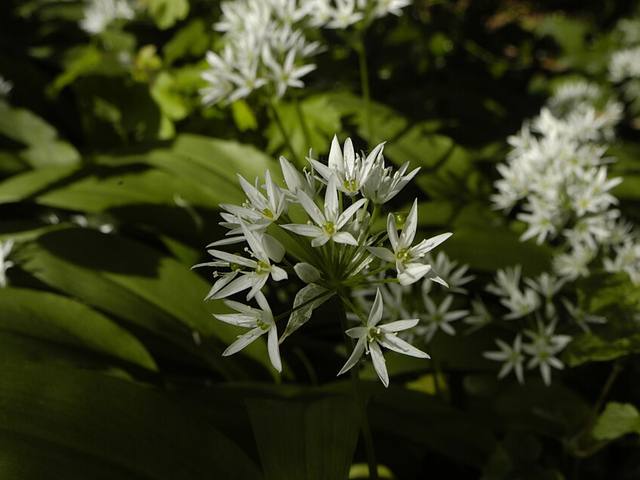
Carpets damp woods in spring with garlicky leaves for pesto. Easily mistaken for poisonous lily of the valley, so learn it from someone who knows.
Hardiness: zones 4 to 7
Light: shade
Size: about 1 ft tall, 0.5 ft wide
Harvest: March to May
From: Europe
Here: Hardy in the Lake Erie shore climate (zone 6b to 7a), so it can live outdoors in the ground.
Good for: food.
Native to: Temperate Europe, Caucasus. Hardy in zones 4 to 7.
The story
Wild garlic carpets European woods in April, and foragers have picked it since the Celts, who named places after it; bear's garlic in German because bears were said to eat it after hibernation. Pesto and soup made from it mark the end of winter.
Planting
Deciduous shade, moist, rich soil; plant bulbs in autumn or seed in spring, 4 inches apart. It spreads into a carpet and goes dormant by summer.
Growing
Leave it alone under trees; mulch with leaves. It self-sows and spreads by bulb.
Harvest and use
Pick leaves in spring before flowering, a few from each plant; flowers and buds are edible; bulbs are small. Do not confuse with lily of the valley, which is poisonous and has no garlic smell.
What to watch for
Lookalikes; otherwise nothing.
See if Ramsons (wild garlic) fits your yard
Free planner: enter your ZIP for frost dates, climate fit and a sowing calendar. No account, no ads, no tracking cookies.
More perennial vegetables, greens and herbs
General guidance, not professional advice. Conditions vary by yard and year; for local specifics ask your county extension office. Never eat a wild plant you cannot identify with certainty. Traditional uses are shared as history, not medical advice. © 2026 Sean Priest · Irie Orchard. Terms & credits · Privacy · Home