Hops
Humulus lupulus
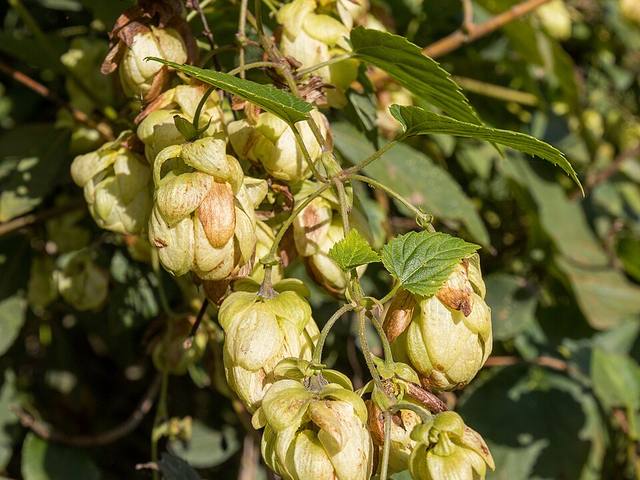
Young spring shoots are eaten like asparagus; the late-summer cones flavour beer.
Hardiness: zones 3 to 8
Light: full sun
Size: about 20 ft tall, 3 ft wide
Harvest: April to September
From: Europe and W. Asia
Here: Hardy in the Lake Erie shore climate (zone 6b to 7a), so it can live outdoors in the ground.
Good for: food, pollinators, traditional use.
Native to: Northern Europe & the taiga, Temperate Europe. Hardy in zones 3 to 8.
The story
Hops were used to preserve and flavour beer in German monasteries by the 800s and reached England in the 1500s against resistance; the shoots are eaten like asparagus in Belgium, and Kent and Washington's Yakima Valley built industries on the cones.
Planting
Full sun, deep rich soil, and a very tall string or trellis; the bine climbs 20 feet a season. Plant rhizomes in spring, 3 feet apart.
Growing
Water heavily and feed; it is a hungry giant. Train two or three bines per plant up the string and cut the rest. Cut down after harvest.
Harvest and use
Cut young shoots in spring for the kitchen; pick cones in late summer when papery and yellow-dusted with lupulin, then dry them.
What to watch for
Downy mildew, aphids, spider mites in heat, and the itchy stems.
Safety
Medicinal uses here are shared as history, not advice. Kitchen amounts are fine for most people, but teas, tinctures and supplements can interact with medicines and aren't safe for everyone, especially in pregnancy, while breastfeeding, for children, or with liver or kidney problems. Ask a doctor or pharmacist before taking any plant as medicine.
See if Hops fits your yard
Free planner: enter your ZIP for frost dates, climate fit and a sowing calendar. No account, no ads, no tracking cookies.
More perennial vegetables, greens and herbs
General guidance, not professional advice. Conditions vary by yard and year; for local specifics ask your county extension office. Never eat a wild plant you cannot identify with certainty. Traditional uses are shared as history, not medical advice. © 2026 Sean Priest · Irie Orchard. Terms & credits · Privacy · Home