Sea kale
Crambe maritima
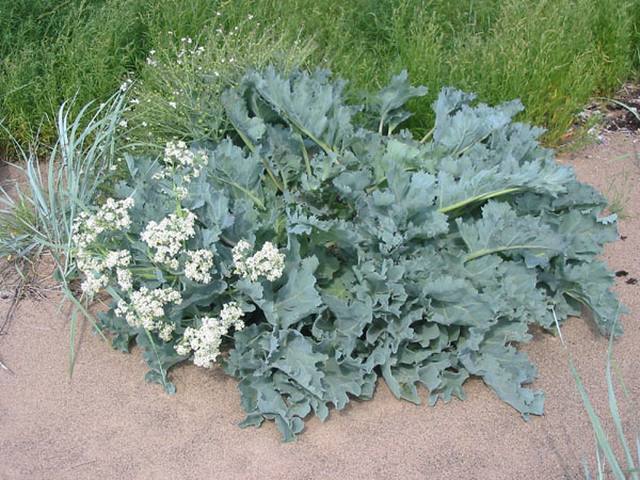
A perennial cabbage of shingle beaches; blanch the spring shoots under a pot and eat them like asparagus.
Hardiness: zones 4 to 8
Light: full sun
Size: about 2 ft tall, 2 ft wide
Harvest: March to May
From: Atlantic and Baltic coasts of Europe
Drought-hardy once established
Here: Hardy in the Lake Erie shore climate (zone 6b to 7a), so it can live outdoors in the ground.
Good for: food, pollinators.
Native to: Temperate Europe, Northern Europe & the taiga. Hardy in zones 4 to 8.
The story
Sea kale grows on the shingle beaches of Britain and the Baltic, where coastal villagers blanched it under banked pebbles and ate the shoots each spring; Victorian gardeners forced it under pots and Thomas Jefferson grew it at Monticello.
Planting
Full sun, deep, sandy, drained soil; it tolerates salt. Plant root cuttings or crowns in spring, 2 feet apart; a perennial for decades.
Growing
Water in dry spells, feed with seaweed or compost, and cut flower stems. Cover crowns with a pot in late winter to blanch the shoots.
Harvest and use
Cut blanched shoots at 6 inches in spring, for three weeks; eat like asparagus. Unblanched leaves are bitter; flower buds are like broccoli.
What to watch for
Slugs on the shoots, clubroot, and wet clay.
See if Sea kale fits your yard
Free planner: enter your ZIP for frost dates, climate fit and a sowing calendar. No account, no ads, no tracking cookies.
More perennial vegetables, greens and herbs
General guidance, not professional advice. Conditions vary by yard and year; for local specifics ask your county extension office. Never eat a wild plant you cannot identify with certainty. Traditional uses are shared as history, not medical advice. © 2026 Sean Priest · Irie Orchard. Terms & credits · Privacy · Home