Sugarcane
Saccharum officinarum
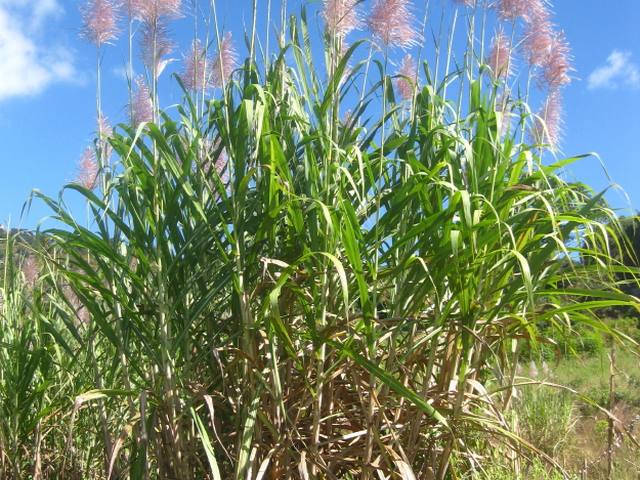
Chew the stems or press them for juice; another Polynesian canoe plant.
Hardiness: zones 9 to 12
Light: full sun
Size: about 12 ft tall, 3 ft wide
Harvest: October to December
From: New Guinea
Here: Too tender to overwinter outdoors on the Lake Erie shore (zone 6b to 7a): grow it in a pot and bring it in, or treat it as an annual.
Good for: food.
Native to: South & Southeast Asian tropics, Hawaiʻi & Pacific Islands, New Guinea & Melanesia. Hardy in zones 9 to 12.
The story
Sugarcane was domesticated in New Guinea 8,000 years ago and carried through Asia; India first crystallized sugar, Arabs spread it to the Mediterranean, and Columbus took it to the Caribbean, where it drove the Atlantic slave trade. Polynesians carried kō to Hawaiʻi as a canoe plant and chewed it fresh.
Planting
Full sun, rich moist soil, and a long hot season; plant stem cuttings with buds horizontally in spring, 6 inches deep. Dies at frost but regrows from the root in mild climates.
Growing
Water and feed generously; it is a tall grass that drinks. Strip dead leaves. Takes 10 to 12 months to mature.
Harvest and use
Cut stems at the base in late autumn; peel and chew, or press for juice. Ratoon crops regrow for several years.
What to watch for
Frost, borers, and rust in humid places.
See if Sugarcane fits your yard
Free planner: enter your ZIP for frost dates, climate fit and a sowing calendar. No account, no ads, no tracking cookies.
More perennial vegetables, greens and herbs
General guidance, not professional advice. Conditions vary by yard and year; for local specifics ask your county extension office. Never eat a wild plant you cannot identify with certainty. Traditional uses are shared as history, not medical advice. © 2026 Sean Priest · Irie Orchard. Terms & credits · Privacy · Home