Malanga (cocoyam)
Xanthosoma sagittifolium
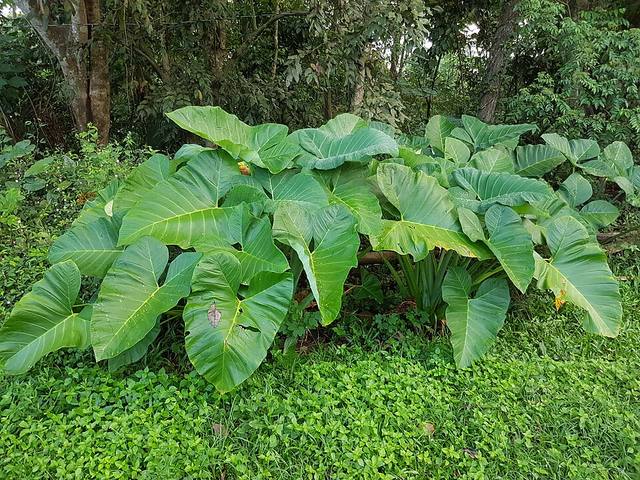
Taro's cousin with a nuttier flavour; cook it well before eating.
Hardiness: zones 9 to 11
Light: part shade
Size: about 5 ft tall, 4 ft wide
Harvest: September to December
From: Tropical America
Here: Too tender to overwinter outdoors on the Lake Erie shore (zone 6b to 7a): grow it in a pot and bring it in, or treat it as an annual.
Good for: food.
Native to: Mexico, Central America & the Caribbean, Tropical South America. Hardy in zones 9 to 11.
The story
Malanga was grown by the Taíno and across tropical America long before taro arrived, and it remains the starchy root of Cuban, Puerto Rican and Dominican kitchens, mashed, fried and grated into fritters; in West Africa it is cocoyam, planted among plantains.
Planting
Part shade or sun, rich moist soil, and heat; plant a corm piece in spring. It grows 5 feet with arrow-shaped leaves.
Growing
Keep moist, mulch, and feed lightly; it tolerates more shade and less water than taro.
Harvest and use
Dig the side cormels at 9 to 12 months; cook thoroughly like taro. Young leaves are cooked greens; never eat any part raw.
What to watch for
Raw tissue, and cold.
See if Malanga (cocoyam) fits your yard
Free planner: enter your ZIP for frost dates, climate fit and a sowing calendar. No account, no ads, no tracking cookies.
More perennial vegetables, greens and herbs
- Crosnes (Chinese artichoke)
- Skirret
- Achira (edible canna)
- Ulluco
- Rhodiola (golden root)
- Lotus (root and seeds)
General guidance, not professional advice. Conditions vary by yard and year; for local specifics ask your county extension office. Never eat a wild plant you cannot identify with certainty. Traditional uses are shared as history, not medical advice. © 2026 Sean Priest · Irie Orchard. Terms & credits · Privacy · Home