Rhodiola (golden root)
Rhodiola rosea
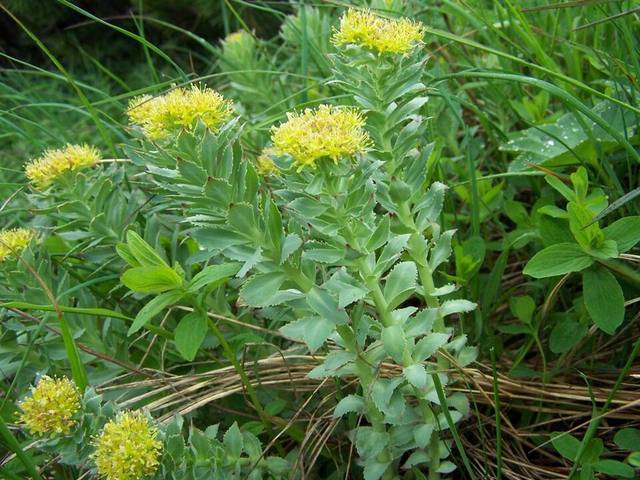
Succulent leaves for salads and a root prized in Siberian folk medicine; wants cold and grit.
Hardiness: zones 1 to 5
Light: full sun
Size: about 1 ft tall, 1 ft wide
Harvest: June to July
From: Arctic and alpine north
Drought-hardy once established
Here: Wants more winter cold than the Lake Erie shore (zone 6b to 7a) provides.
Good for: food, pollinators, traditional use.
Native to: Alaska, Northern Europe & the taiga, Temperate Europe. Hardy in zones 1 to 5.
The story
Rhodiola, golden root, grows on arctic cliffs and alpine scree from Alaska to Siberia and Scandinavia, where Sámi, Inuit and Siberian peoples ate the succulent leaves and used the rose-scented root against fatigue and cold; Vikings and Soviet athletes are both said to have used it.
Planting
Full sun, gritty, sharply drained soil, and a cold climate; it rots in heat and wet. Plant divisions or seed in spring in a rock garden or trough.
Growing
Water sparingly, never feed, and keep it cool. Divide every few years.
Harvest and use
Young leaves and shoots in spring for salads, slightly sour; roots after three or four years, dried for tea or tincture, in moderation.
What to watch for
Heat, wet soil, and slugs.
Safety
Rhodiola can interact with antidepressants and with diabetes and blood pressure medicines, and there's too little research to call it safe in pregnancy.
Medicinal uses here are shared as history, not advice. Kitchen amounts are fine for most people, but teas, tinctures and supplements can interact with medicines and aren't safe for everyone, especially in pregnancy, while breastfeeding, for children, or with liver or kidney problems. Ask a doctor or pharmacist before taking any plant as medicine.
See if Rhodiola (golden root) fits your yard
Free planner: enter your ZIP for frost dates, climate fit and a sowing calendar. No account, no ads, no tracking cookies.
More perennial vegetables, greens and herbs
- Lotus (root and seeds)
- Elephant foot yam (suran)
- Tulsi (holy basil)
- Drumstick (moringa, for pods)
- Timur (Nepal pepper)
- Large cardamom
General guidance, not professional advice. Conditions vary by yard and year; for local specifics ask your county extension office. Never eat a wild plant you cannot identify with certainty. Traditional uses are shared as history, not medical advice. © 2026 Sean Priest · Irie Orchard. Terms & credits · Privacy · Home