Skirret
Sium sisarum
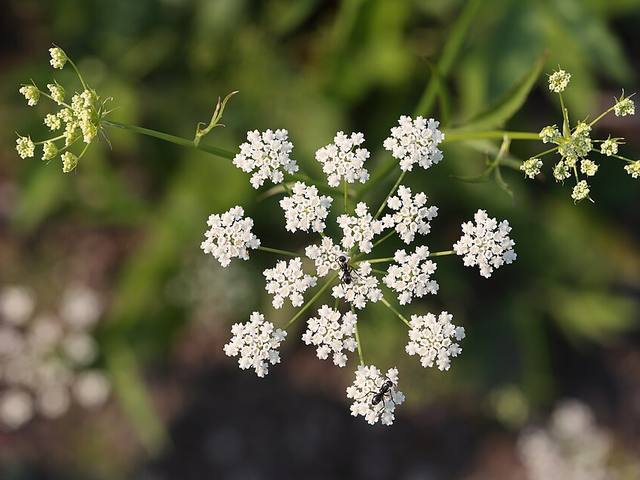
The sweet root of medieval kitchens: perennial, parsnip-like clusters.
Hardiness: zones 5 to 9
Light: full sun to part shade
Size: about 4 ft tall, 2 ft wide
Harvest: October to November
From: E. Asia and E. Europe
Here: Hardy in the Lake Erie shore climate (zone 6b to 7a), so it can live outdoors in the ground.
Good for: food, pollinators.
Native to: East Asia, Temperate Europe. Hardy in zones 5 to 9.
The story
Skirret was the sweet root of Roman and medieval tables, grown for Tiberius and in every Tudor kitchen garden until the potato pushed it out; the name comes from the Dutch for sugar root, and it is being revived by heritage growers.
Planting
Full sun or part shade, moist rich soil; plant crowns or sow seed in spring, a foot apart. A hardy perennial to 4 feet.
Growing
Water steadily; rich, even moisture makes fat roots without a woody core. Divide every few years.
Harvest and use
Dig clusters of thin white roots after frost; scrub, boil or roast, and remove the woody core from older roots. Sweet, parsnip-like.
What to watch for
Carrot fly occasionally; drought makes woody roots.
See if Skirret fits your yard
Free planner: enter your ZIP for frost dates, climate fit and a sowing calendar. No account, no ads, no tracking cookies.
More perennial vegetables, greens and herbs
- Achira (edible canna)
- Ulluco
- Rhodiola (golden root)
- Lotus (root and seeds)
- Elephant foot yam (suran)
- Tulsi (holy basil)
General guidance, not professional advice. Conditions vary by yard and year; for local specifics ask your county extension office. Never eat a wild plant you cannot identify with certainty. Traditional uses are shared as history, not medical advice. © 2026 Sean Priest · Irie Orchard. Terms & credits · Privacy · Home