Arrowroot
Maranta arundinacea
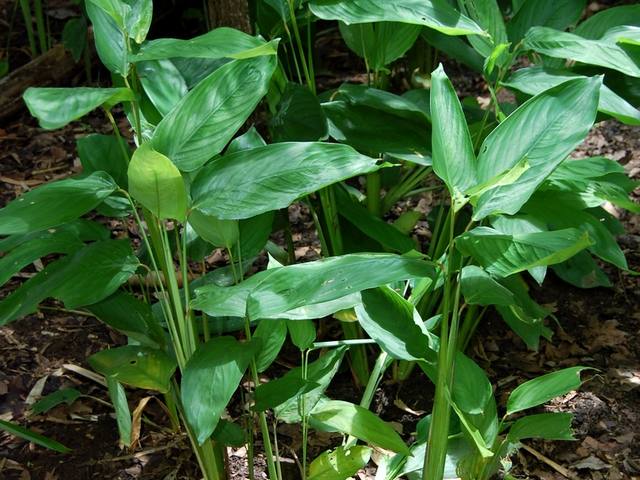
Starchy rhizomes dug after the leaves die back; the source of arrowroot flour.
Hardiness: zones 9 to 11
Light: part shade
Size: about 3 ft tall, 3 ft wide
Harvest: October to December
From: Northern South America
Here: Too tender to overwinter outdoors on the Lake Erie shore (zone 6b to 7a): grow it in a pot and bring it in, or treat it as an annual.
Good for: food.
Native to: Mexico, Central America & the Caribbean, Tropical South America. Hardy in zones 9 to 11.
The story
Arrowroot was grown by the Arawak of the Caribbean, who named it for its use on poisoned-arrow wounds, and St. Vincent became the world's arrowroot island after emancipation; the fine starch thickens sauces and fed Victorian invalids. It grows anywhere ginger does.
Planting
Part shade, rich moist soil, and heat; plant rhizome pieces in spring, in the ground or a large pot. A leafy 3-foot plant.
Growing
Water steadily and feed lightly; mulch. It dies back when the rhizomes mature.
Harvest and use
Dig rhizomes at 10 to 12 months when the leaves yellow; grate, wash the starch out through cloth, settle, and dry. Young rhizomes can be boiled.
What to watch for
Drought and cold.
See if Arrowroot fits your yard
Free planner: enter your ZIP for frost dates, climate fit and a sowing calendar. No account, no ads, no tracking cookies.
More perennial vegetables, greens and herbs
- Malanga (cocoyam)
- Crosnes (Chinese artichoke)
- Skirret
- Achira (edible canna)
- Ulluco
- Rhodiola (golden root)
General guidance, not professional advice. Conditions vary by yard and year; for local specifics ask your county extension office. Never eat a wild plant you cannot identify with certainty. Traditional uses are shared as history, not medical advice. © 2026 Sean Priest · Irie Orchard. Terms & credits · Privacy · Home