Banana yucca
Yucca baccata
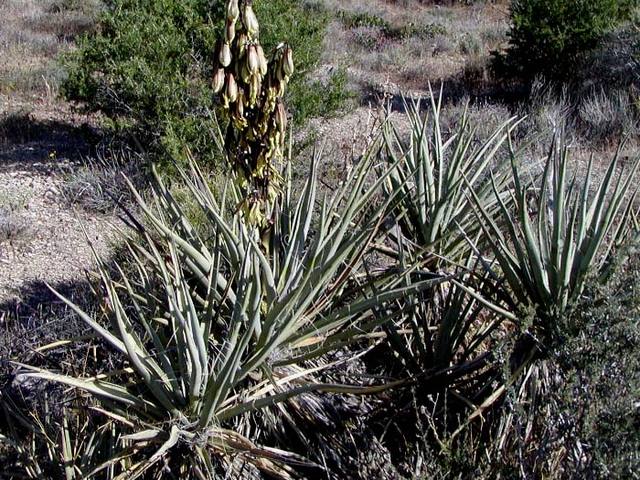
Fleshy fruit roasted or dried into cakes by Diné and Pueblo cooks; flowers are edible too.
Hardiness: zones 5 to 9
Light: full sun
Size: about 3 ft tall, 4 ft wide
Harvest: August to September
From: SW United States
Here: Hardy in the Lake Erie shore climate (zone 6b to 7a), so it can live outdoors in the ground.
Good for: food, pollinators, wildlife.
Native to: Desert Southwest, Rockies & Great Basin. Hardy in zones 5 to 9.
The story
Banana yucca fruit was roasted, dried into cakes and boiled into a sweet paste by the Diné, Hopi, Apache and Pueblo peoples, the flowers eaten and the leaves twisted into cord and sandals; the root made soap for washing hair before ceremonies. It fruits only when its yucca moth is present.
Planting
Full sun, dry rocky soil; hardy to zone 5. Plant in spring; a stemless rosette to 3 feet with dagger leaves. It needs its moth pollinator to fruit, or hand pollination.
Growing
Water never once established. Remove dead leaves. Keep away from paths.
Harvest and use
Pick fruit in late summer when green-purple and soft; roast or bake, remove the seeds, and eat or dry the sweet pulp. Flowers in spring, boiled.
What to watch for
The dagger leaves, and no fruit without the moth.
See if Banana yucca fits your yard
Free planner: enter your ZIP for frost dates, climate fit and a sowing calendar. No account, no ads, no tracking cookies.
More native and wild plants
- Texas persimmon
- Emory oak (bellota)
- Screwbean mesquite
- Hollyleaf cherry (islay)
- California wild grape
- California black walnut
General guidance, not professional advice. Conditions vary by yard and year; for local specifics ask your county extension office. Never eat a wild plant you cannot identify with certainty. Traditional uses are shared as history, not medical advice. © 2026 Sean Priest · Irie Orchard. Terms & credits · Privacy · Home