Hollyleaf cherry (islay)
Prunus ilicifolia
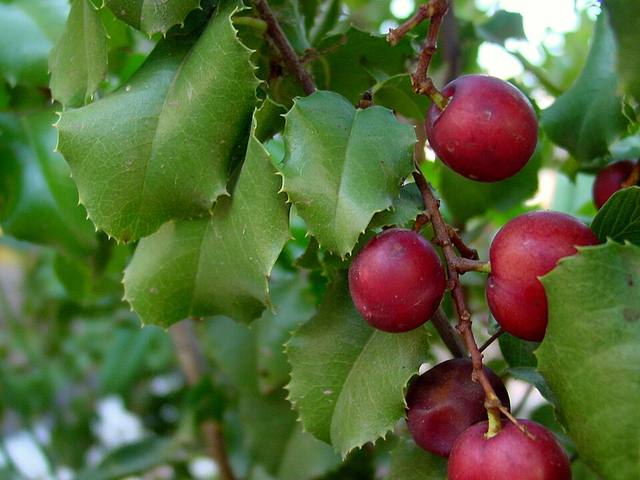
Thin sweet flesh, and a big kernel the Chumash leached and ground into mush.
Hardiness: zones 8 to 10
Light: full sun to part shade
Size: about 20 ft tall, 15 ft wide
Harvest: September to November
From: California
Here: Too tender to overwinter outdoors on the Lake Erie shore (zone 6b to 7a): grow it in a pot and bring it in, or treat it as an annual.
Good for: food, pollinators, wildlife.
Native to: California. Hardy in zones 8 to 10.
The story
Islay, the hollyleaf cherry, was a staple of the Chumash, Kumeyaay and Tongva of coastal California, who ate the thin sweet flesh and, more importantly, leached and ground the big kernel into a mush; whole hillsides of it were tended. It is the evergreen cherry of the chaparral.
Planting
Full sun or part shade, dry drained soil, and a Mediterranean climate; no summer water. Plant in autumn; an evergreen to 20 feet, clippable.
Growing
Water the first two summers, then never. Clip as a hedge or let it grow. Slow and long-lived.
Harvest and use
Fruit ripens red to black in autumn; the thin flesh is sweet. The kernel must be cracked, leached in several changes of water, and cooked; raw it contains cyanide compounds.
What to watch for
Summer water; raw kernels.
See if Hollyleaf cherry (islay) fits your yard
Free planner: enter your ZIP for frost dates, climate fit and a sowing calendar. No account, no ads, no tracking cookies.
More native and wild plants
- California wild grape
- California black walnut
- ʻŌhelo berry
- Pond apple
- American beautyberry
- Chickasaw plum
General guidance, not professional advice. Conditions vary by yard and year; for local specifics ask your county extension office. Never eat a wild plant you cannot identify with certainty. Traditional uses are shared as history, not medical advice. © 2026 Sean Priest · Irie Orchard. Terms & credits · Privacy · Home