Chickasaw plum
Prunus angustifolia
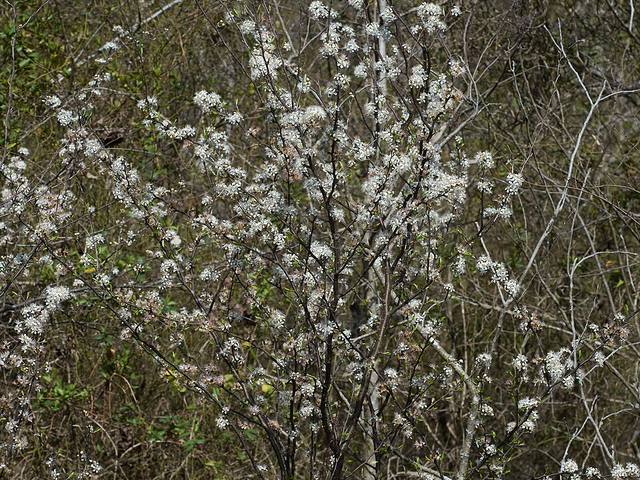
Thicket plum the Chickasaw tended; tart-sweet fruit for jam, early white bloom for bees.
Hardiness: zones 5 to 9
Light: full sun
Size: about 15 ft tall, 15 ft wide
Harvest: June to July
From: SE United States
Drought-hardy once established
Here: Hardy in the Lake Erie shore climate (zone 6b to 7a), so it can live outdoors in the ground.
Good for: food, pollinators, wildlife.
Native to: Southeast, Great Plains & Texas, Midwest & Great Lakes. Hardy in zones 5 to 9.
The story
Chickasaw plum thickets were tended by the Chickasaw, Cherokee and Creek, who planted them around villages and dried the fruit; settlers found plum orchards already growing across the Southeast, and the thickets still mark old homesites and feed every bird in spring.
Planting
Full sun, any drained soil, even sand; plant two for pollination. A suckering 15-foot thicket; site it where that is welcome.
Growing
Water the first year, then nothing. Thin suckers or let it hedge. Prune only dead wood.
Harvest and use
Fruit ripens red to yellow in early summer; tart skin, sweet flesh. Eat fresh, or make jam and jelly.
What to watch for
Brown rot and black knot; plum curculio.
See if Chickasaw plum fits your yard
Free planner: enter your ZIP for frost dates, climate fit and a sowing calendar. No account, no ads, no tracking cookies.
More native and wild plants
- Aguacatillo (wild avocado)
- Toromiro
- Goosefoot (pitseed)
- Sumpweed (marsh elder)
- Wild rice (manoomin)
- Maguey (pulque agave)
General guidance, not professional advice. Conditions vary by yard and year; for local specifics ask your county extension office. Never eat a wild plant you cannot identify with certainty. Traditional uses are shared as history, not medical advice. © 2026 Sean Priest · Irie Orchard. Terms & credits · Privacy · Home