Wild rice (manoomin)
Zizania palustris
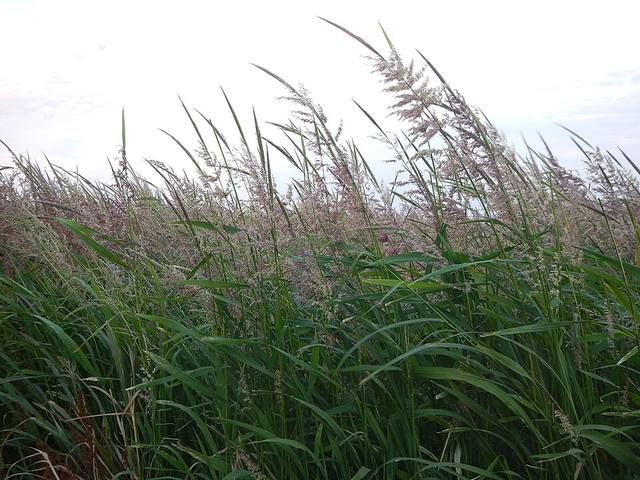
The sacred grain of the Anishinaabe, knocked into canoes from lake shallows each late summer.
Hardiness: zones 3 to 8
Light: full sun
Size: about 6 ft tall, 1 ft wide
Harvest: August to September
From: Great Lakes
Here: Hardy in the Lake Erie shore climate (zone 6b to 7a), so it can live outdoors in the ground.
Good for: food, wildlife.
Native to: Midwest & Great Lakes, Eastern Canada. Hardy in zones 3 to 8.
The story
Manoomin, wild rice, is sacred to the Anishinaabe, whose migration story tells them to travel west until they found the food that grows on water. Each late summer, ricers pole canoes through the shallows and knock the ripe grain in with cedar sticks, then parch it over fire. It still grows in the western Great Lakes.
Planting
Shallow, slow-moving water 1 to 3 feet deep with a soft mucky bottom, in full sun. Sow fresh seed in autumn, pressed into the mud; seed must never dry out.
Growing
Needs clean, cold water and a winter freeze. It is an annual and reseeds itself; water levels that rise too quickly in early summer can drown it.
Harvest and use
Harvest from a canoe in late August or September, knocking the heads gently. Dry, parch, then thresh (traditionally by 'jigging' with feet) and winnow.
What to watch for
Respect tribal harvesting rights; buy hand-harvested manoomin from tribal sources.
See if Wild rice (manoomin) fits your yard
Free planner: enter your ZIP for frost dates, climate fit and a sowing calendar. No account, no ads, no tracking cookies.
More native and wild plants
- Maguey (pulque agave)
- American gooseberry
- Black huckleberry
- Mountain huckleberry
- Native honeyberry (mountain fly honeysuckle)
- Cattail
General guidance, not professional advice. Conditions vary by yard and year; for local specifics ask your county extension office. Never eat a wild plant you cannot identify with certainty. Traditional uses are shared as history, not medical advice. © 2026 Sean Priest · Irie Orchard. Terms & credits · Privacy · Home