Black huckleberry
Gaylussacia baccata
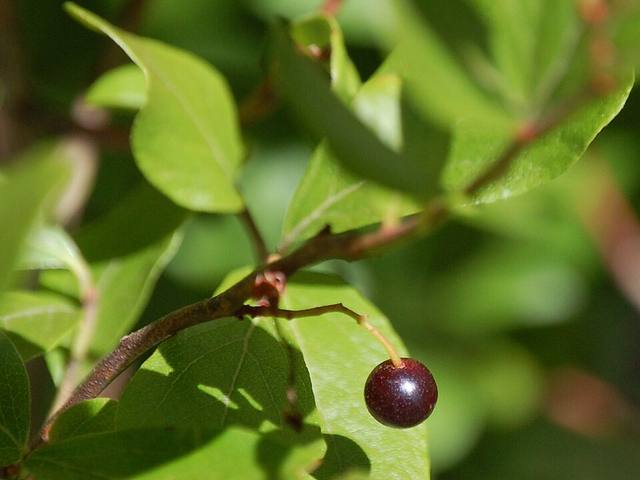
Blueberry's crunchy-seeded cousin of sandy, acid woods; needs the same acid soil as blueberries.
Hardiness: zones 3 to 7
Light: part shade
Size: about 3 ft tall, 3 ft wide
Harvest: July to August
From: E. North America
Drought-hardy once established
Here: Hardy in the Lake Erie shore climate (zone 6b to 7a), so it can live outdoors in the ground.
Good for: food, pollinators, wildlife.
Native to: Northeast, Southeast, Midwest & Great Lakes, Eastern Canada. Hardy in zones 3 to 7.
The story
Black huckleberry is the plant Huckleberry Finn was named for. It looks like a blueberry until you bite one: ten hard little seeds crunch between your teeth. Hold a leaf to the sun and it sparkles with gold resin dots.
Planting
Sun or part shade and sandy, very acid soil, the same as blueberries.
Growing
Mulch with pine needles or oak leaves. It spreads slowly into a low colony.
Harvest and use
Pick in July and August. The flavor is deeper and spicier than a blueberry's and makes a better pie.
What to watch for
Slow to establish and hard to transplant from the wild. Buy nursery-grown plants.
See if Black huckleberry fits your yard
Free planner: enter your ZIP for frost dates, climate fit and a sowing calendar. No account, no ads, no tracking cookies.
More native and wild plants
- Mountain huckleberry
- Native honeyberry (mountain fly honeysuckle)
- Cattail
- Tī kōuka (cabbage tree)
- Harakeke (New Zealand flax)
- Mānuka
General guidance, not professional advice. Conditions vary by yard and year; for local specifics ask your county extension office. Never eat a wild plant you cannot identify with certainty. Traditional uses are shared as history, not medical advice. © 2026 Sean Priest · Irie Orchard. Terms & credits · Privacy · Home