Harakeke (New Zealand flax)
Phormium tenax
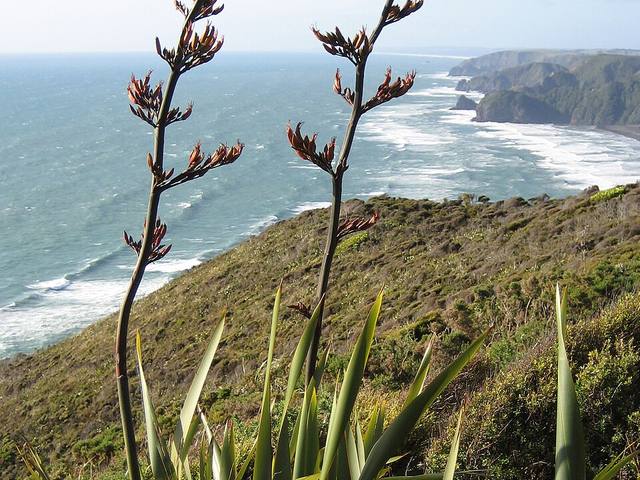
Great fans of sword leaves woven into kete and cord; nectar-rich flower stalks feed birds and bees.
Hardiness: zones 8 to 11
Light: full sun
Size: about 8 ft tall, 6 ft wide
From: Aotearoa New Zealand
Here: Too tender to overwinter outdoors on the Lake Erie shore (zone 6b to 7a): grow it in a pot and bring it in, or treat it as an annual.
Good for: pollinators, wildlife, screens and hedges.
Native to: Aotearoa New Zealand. Hardy in zones 8 to 11.
The story
Harakeke is the great weaving plant of Aotearoa. Māori named and tended dozens of varieties for the strength, softness or colour of their fibre, and cut leaves by a rule that still holds: leave the central shoot and the two leaves beside it, the child and its parents.
Planting
Full sun, any soil that holds some moisture; it stands wind, salt and wet feet. Give it room.
Growing
Remove old outer leaves at the base. Divide big clumps in autumn or spring.
Harvest and use
The flower stalks drip nectar that birds and bees seek out; a little can be shaken from the flowers as a sweetener. The leaves are for weaving and tying, not eating.
What to watch for
Scale insects and a leaf-notching caterpillar mark the leaves. Outside New Zealand, check that it is not weedy where you live.
See if Harakeke (New Zealand flax) fits your yard
Free planner: enter your ZIP for frost dates, climate fit and a sowing calendar. No account, no ads, no tracking cookies.
More native and wild plants
General guidance, not professional advice. Conditions vary by yard and year; for local specifics ask your county extension office. Never eat a wild plant you cannot identify with certainty. Traditional uses are shared as history, not medical advice. © 2026 Sean Priest · Irie Orchard. Terms & credits · Privacy · Home