Mānuka
Leptospermum scoparium
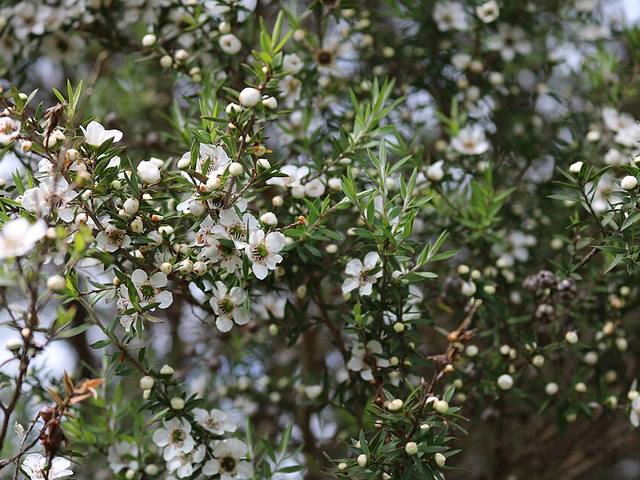
Small white flowers behind a famous honey; the leaves make a resinous tea. A tough pioneer on poor ground.
Hardiness: zones 7 to 11
Light: full sun
Size: about 12 ft tall, 8 ft wide
Harvest: year-round
From: Aotearoa and SE Australia
Drought-hardy once established
Here: Hardy in the Lake Erie shore climate (zone 6b to 7a), so it can live outdoors in the ground.
Good for: pollinators, wildlife, food, traditional use.
Native to: Aotearoa New Zealand, Australia. Hardy in zones 7 to 11.
The story
Mānuka is a pioneer: it is the first shrub to cover cleared or burnt ground, sheltering the forest that follows. Māori used its hard wood and its bark and leaves; Captain Cook's crew brewed the leaves, which is why it is also called tea tree.
Planting
Full sun and poor, free-draining acid soil. It tolerates wind, drought and some frost.
Growing
Clip lightly after flowering to keep it dense; never cut into bare wood. It needs no feeding.
Harvest and use
Steep a few fresh sprigs for a resinous tea. The flowers, late spring to summer, are the source of mānuka honey.
What to watch for
Scale and sooty mould in sheltered gardens. Rich soil and shade make it leggy and short-lived.
Safety
Medicinal uses here are shared as history, not advice. Kitchen amounts are fine for most people, but teas, tinctures and supplements can interact with medicines and aren't safe for everyone, especially in pregnancy, while breastfeeding, for children, or with liver or kidney problems. Ask a doctor or pharmacist before taking any plant as medicine.
See if Mānuka fits your yard
Free planner: enter your ZIP for frost dates, climate fit and a sowing calendar. No account, no ads, no tracking cookies.
More native and wild plants
General guidance, not professional advice. Conditions vary by yard and year; for local specifics ask your county extension office. Never eat a wild plant you cannot identify with certainty. Traditional uses are shared as history, not medical advice. © 2026 Sean Priest · Irie Orchard. Terms & credits · Privacy · Home