Native honeyberry (mountain fly honeysuckle)
Lonicera caerulea var. villosa
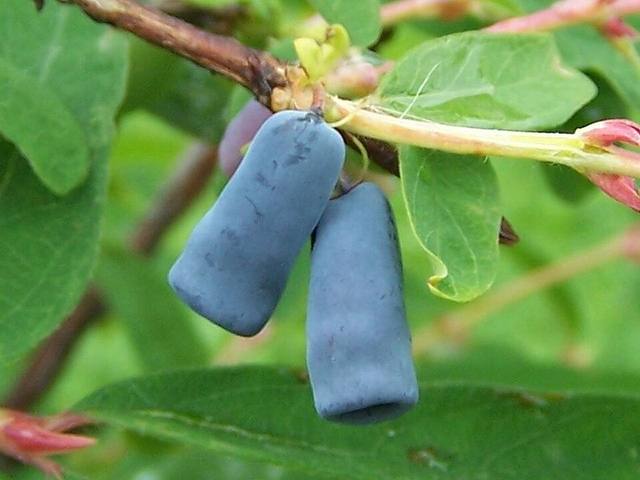
The wild North American form of haskap, found in northern bogs and woods; plant two for pollination.
Hardiness: zones 2 to 6
Light: part shade
Size: about 3 ft tall, 3 ft wide
Harvest: June
From: Northern North America
Here: Hardy in the Lake Erie shore climate (zone 6b to 7a), so it can live outdoors in the ground.
Good for: food, pollinators, wildlife.
Native to: Northeast, Midwest & Great Lakes, Eastern Canada, Western Canada, Alaska. Hardy in zones 2 to 6.
The story
Mountain fly honeysuckle is North America's own honeyberry, a small shrub of northern bogs and cool woods. It is close kin to the Russian and Japanese haskaps that breeders have turned into a crop.
Planting
Sun or part shade and moist, acid, peaty soil. Plant two different seedlings so they can pollinate each other.
Growing
Mulch and keep it watered. It needs very little pruning.
Harvest and use
Among the first fruit of the year, ripe in June: small, long blue berries with a flavor between blueberry and raspberry.
What to watch for
Birds get there first. It dislikes hot summers.
See if Native honeyberry (mountain fly honeysuckle) fits your yard
Free planner: enter your ZIP for frost dates, climate fit and a sowing calendar. No account, no ads, no tracking cookies.
More native and wild plants
General guidance, not professional advice. Conditions vary by yard and year; for local specifics ask your county extension office. Never eat a wild plant you cannot identify with certainty. Traditional uses are shared as history, not medical advice. © 2026 Sean Priest · Irie Orchard. Terms & credits · Privacy · Home